





The Balance of Nuclear Deterrence in Europe after the Cold War
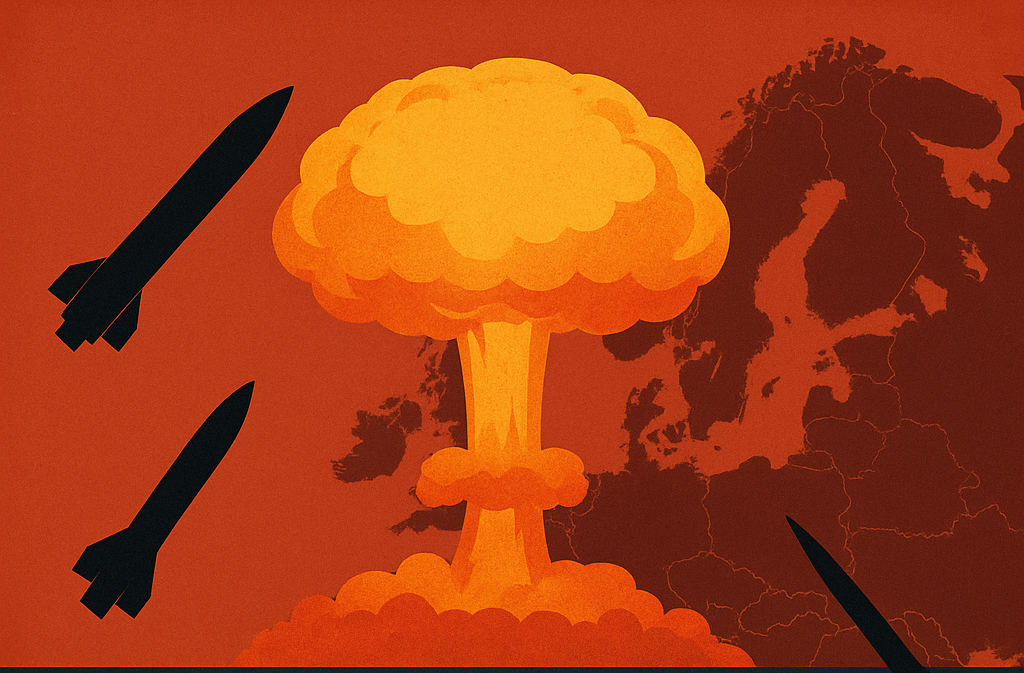

Cold War-era nuclear deterrence is arguably the most complicated and challenging security concept faced by European states. With the rise of multipolar world order, the ways in which modern European states apply deterrence have evolved dramatically due to ongoing tensions in Ukraine and rapid advancements in technology.
To safeguard sovereignty, states continue to utilize all instruments of national security, and in many cases, acquiring or upgrading nuclear weapons. Such as how the United States and the Soviet Union amassed enormous nuclear arsenals to promote national security domestically and internationally in response to rising tensions and competition for global influence during the Cold War.
Although the end of the Cold War created a viable balance of power in Europe through the application of nuclear deterrence, this created additional security challenges for other nations, as demonstrated by Russian aggression against Ukraine in 2022. Therefore, this paper demonstrates how nuclear strategies contributed to a relatively stable post-Cold War European security environment while simultaneously identifying weaknesses that would result in instability in Ukraine. While this paper recognizes that arms control remains a primary method for diffusing tensions, it argues that strengthening NATO’s eastern flank and adhering to the principles of non-proliferation are essential measures for ensuring credible deterrence in contemporary Europe.
Historical Context and Cold War Impact on Deterrence
Nuclear deterrence emerged as a prominent global issue during the Cold War based on the notion that the threat of retaliatory action could act as a deterrent to nuclear conflict. Ideologically driven animosity between the United States and the Soviet Union forced both superpowers to extend their strategic influence as nuclear weapons became a dominant instrument of statecraft.
As both superpowers built large nuclear arsenals, global tensions increased and necessitated strategic restraint through arms control agreements such as the Strategic Arms Reduction Treaty (START) and the Nuclear Non-Proliferation Treaty (NPT). There were several key treaties throughout the Cold War that attempted to regulate nuclear behavior and decrease risks, including the Limited Test Ban Treaty (LTBT), NPT, and Intermediate-Range Nuclear Forces (INF) Treaty. All of these agreements were successful because they were preceded by earlier initiatives, including the 1963 Partial Test Ban Treaty, which acknowledged the dangers of nuclear proliferation and nuclear accidents.
Cooperation established norms to limit state behavior and reduce incentives for the use of nuclear weapons. As seen in the current Russia-Ukraine conflict, although Moscow has repeatedly stated it will use nuclear weapons, nuclear weapons have not been used.
When states face external insecurity, they tend to build up their internal security capabilities. As British academic Sir Lawrence David Freedman noted, U.S. nuclear doctrine traditionally discouraged European allies from developing their own nuclear capabilities, instead encouraging strong conventional alliances. By the 1950s, however, the U.S. began to share limited nuclear technology with allies to limit proliferation.
The United Kingdom developed its own nuclear deterrent and integrated it with the U.S. nuclear strategy under NATO, but British policymakers continued to struggle with the question: how does the U.K avoid dependence on American technology? Charles de Gaulle pursued a full independent French nuclear force to ensure national sovereignty and to reduce reliance on the superpowers.
Europe’s balance of power, since the onset of the Cold War, has rested significantly on nuclear deterrence. The resurgence of Russian assertiveness particularly following its invasion of Ukraine presents significant challenges to this equilibrium. The changing nature of U.S. foreign policy, coupled with technological innovations such as hypersonic weapons, adds additional complexities to the current deterrence dynamics in Europe.
Europe’s balance of power, since the onset of the Cold War, has rested significantly on nuclear deterrence.
These developments raise important questions: To what degree have nuclear deterrence strategies shaped the framework of Europe’s balance of power, and to what degree do current weaknesses impede the effectiveness of those strategies in today’s geopolitical climate? Both NATO and Russia rely heavily on nuclear deterrence, but the increasing ambiguity surrounding the effectiveness of those strategies stems from policy uncertainty, strategic ambiguity, and increasing security dilemmas.
Considerations
Balance of Power Theory: The balance of power theory focuses on the distribution of capabilities among states in a manner that prohibits any single state from attaining hegemony. Neorealist scholars such as John Mearsheimer focus on the military and economic bases of power, whereas classical realist scholars such as Hans Morgenthau consider power to be broader and include population, resources, and territory. Nuclear weapons undoubtedly represent a significant component of state power. The balance of power can refer to the overall distribution of power in a system, specific configurations such as multipolarity, or the deliberate policies of states to prevent hegemony.
Nuclear Deterrence Theory: Nuclear deterrence theory asserts that states possessing nuclear weapons will act rationally to avoid escalation and will only use nuclear weapons to maintain stability and not to pursue aggressive objectives. Critics contend that deterrence has successfully operated in certain situations such as the Cold War, but has failed in other situations, such as hostilities between India and Pakistan. The Ukrainian case is particularly intriguing in that it represents a paradox in that the region remained relatively stable following the collapse of the Soviet Union; however, deterrence was not sufficient to prevent Russia’s 2022 invasion.
Nuclear Responsibility Theory: Nuclear responsibility theory posits that nuclear-armed states should behave as “responsible” actors and use nuclear weapons solely for defensive purposes and not for coercion, territorial gain or expansion. This perspective posits that nuclear deterrence is designed to prevent conflict, not to encourage offensive behavior—a core tenet of NATO’s posture towards Russia.
Nuclear Coercion Theory: Nuclear coercion theory asserts that nuclear-armed states can attempt to influence the behavior of non-nuclear states through implied nuclear threats, even though nuclear weapons are not used directly. In this regard, Russia’s concerns regarding NATO’s eastward expansion represent a long-standing form of coercive signaling stemming from Russia’s nuclear capability.
Discussion and Implications
Reemergence of Nuclear Fears: The war in Ukraine has reignited nuclear fears across Europe. Russia has employed overt nuclear threats, relocated strategic assets, and highlighted the growth of its nuclear arsenal in an effort to dissuade the West from intervening in Ukraine. NATO faces a challenge in supporting Ukraine without risking escalation to the nuclear level.
Declining Arms Control Architecture: The once robust arms control architecture is declining. The INF Treaty has expired, the Open Skies Treaty has expired, and New START is approaching expiration without extension. The loss of binding rules heightens the risk of miscalculation.
Continued Modernization of Nuclear Forces: Russia continues to modernize its nuclear triad, including hypersonic weapons and deployments in Belarus. NATO is responding to Russia’s actions by bolstering its eastern flank and revising strategic documents.
Debate Over France’s Nuclear Umbrella: Increased uncertainty regarding U.S. commitments especially exacerbated by the Trump administration has led to renewed debates as to whether Europe should rely more heavily on France’s nuclear umbrella or pursue greater strategic autonomy.
China as a Global Variable: China’s expanding nuclear arsenal adds complexity to the global situation and compels NATO to include China in its strategic considerations.
Technological Disruptions: Cyber threats, artificial intelligence, and rapidly advancing missile technology blur the lines between the conventional and nuclear domains, requiring updated strategic planning.
Accession of Finland and Sweden to NATO: Finland’s accession to NATO in 2023 and Sweden’s accession in 2024 represent a significant shift in the security structure of Europe, motivated primarily by heightened nuclear threats from Russia.
Increasing Proliferation Risks: Concerns regarding nuclear proliferation—either through the expanded sharing of U.S. weapons or potential terrorist acquisition of nuclear materials—continue to pose a substantial challenge.
Recommendations
- Strengthen Arms Control Agreements. Negotiations regarding arms control must resume, with new frameworks addressing emerging domains such as hypersonic weapons and space-based systems.
- Increase Transparency and Confidence-Building. Mechanisms to facilitate data-sharing between NATO and Russia could contribute to decreasing miscalculations and fostering dialogue.
- Enhance NATO’s Nuclear Deterrence Posture. Given Russia’s larger nuclear arsenal, NATO may need to modify its nuclear distribution to sustain deterrence and stability.
Conclusion
Nuclear deterrence continues to serve as a vital mechanism in maintaining the balance of power in Europe by preventing major conflicts and establishing stability. At the same time, there are grave consequences associated with nuclear deterrence if the norms that govern its operation are violated, or if the escalatory process begins. The evolving geopolitical landscape, ranging from the war in Ukraine to emerging technologies, are fundamentally altering the understanding of security, alliances, and survival in Europe. Ensuring stability will depend upon the establishment of stronger arms control, enhanced communication, and a more robust NATO posture.



Mearsheimer and Waltz of course argued in favor of nukes as an instrument in regulating the behavior of states in a self-help environment but sometimes prudent and proliferation is the safest option.