Deterrence by Disruption

Abstract: This article argues that weak states can deter stronger powers by disrupting the systems that convert military power into political outcomes. Drawing on classical asymmetric conflict theory and contemporary concepts like kill-chain denial, integrated deterrence, and information resilience, it shows how small maritime states can impose delays, uncertainties, and political risks on superior forces. Deterrence by disruption offers vulnerable states a realistic way to survive and shape superior power behavior without seeking parity.
Introduction
Powerful militaries can lose wars to weaker opponents, and small states can deter stronger ones. These outcomes contradict the conventional theory of force and show that military power alone does not guarantee political success. Modern conflicts reveal that this is not an anomaly but a recurring pattern. Great powers possess advanced platforms and precision weapons yet often struggle to achieve their political outcomes against less capable adversaries. Where small states cannot force victory, they can impose deterrence by shaping the costs and uncertainties that make aggression politically unattractive. Understanding why the weak endure, and how they deter, is a central problem for contemporary strategy.
Scholars provide explanations for parts of this puzzle. Andrew Mack argues that asymmetric conflict is shaped by interest and survival. Jeffrey Record demonstrates that strong powers lose limited wars when domestic patience collapses. Ivan Arreguin-Toft shows that weaker actors prevail when they adopt methods that undermine the stronger. Gil Merom explains how democracies defeat themselves when moral costs rise. Yarger links success to a coherent strategy that aligns ends, ways, and means. However, most of this literature focuses on irregular warfare and insurgency. There is less attention on how the same logic now appears in deterrence, especially at sea and in multi-domain competition.
This paper argues that contemporary asymmetric deterrence works by disrupting systems rather than destroying platforms. A weaker defender targets the attacker’s decision-making, legitimacy, and operational networks. If a strong power cannot fight quickly, decisively, or confidently, aggression loses value. The following section connects classical theories of will, method, moral constraints, and strategy to contemporary deterrence mechanisms such as kill-chain disruption, alliance integration, multi-domain pressure, and information resilience.
The Logic of Asymmetric Success
Asymmetry of Will, Method, and Political Endurance
War outcomes are shaped by which side views the war as vital. This is the core of Andrew Mack’s logic on asymmetric conflict: weaker actors fight as if survival is at stake, while stronger actors often fight a limited war for peripheral aims. The strong actor rarely faces an existential threat and therefore fights under political and moral limits that shorten its tolerance for loss. As a result, determination rather than military capability often predicts who prevails. Mack’s insight reframes success as a contest of commitment, not a math problem of force ratios. The Vietnam War is the clearest illustration: despite overwhelming U.S. military superiority, Hanoi treated the war as a matter of survival. It absorbed losses that the United States could not politically sustain and eventually forced the United States to withdraw. Therefore, political will is the foundation of asymmetric success. The side that fights for survival accepts greater losses and uses time to erode its opponent’s legitimacy.
Strong powers lose limited wars when domestic patience collapses before the military can achieve their strategic objectives. Jeffrey Record shows that post-1945 U.S. failures (e.g., Vietnam, Lebanon and Somalia) occurred against weaker opponents that outlasted America’s political will. Democratic societies are accountable to public opinion and media scrutiny, and they hesitate at prolonged costs when national survival is not at risk. In Vietnam, the conflict was peripheral for the United States and existential for Hanoi. The gap in stakes translated into nominal endurance. Because each side valued the war in different ways, persistence—not superior weapons—determined the outcome.
War is not determined by will alone, but also by how each side’s methods interact. Ivan Arreguin-Toft’s strategic interaction theory argues that success depends on the relationship between direct and indirect approaches. When both actors use similar fighting methods—direct vs. direct or indirect vs. indirect—the stronger side’s quantitative military advantage dominates. However, when the weak adopt the opposite approach, especially employing irregular tactics against conventional forces, their chances of success rise sharply. The indirect strategy allows the weak to attack the enemy’s plan rather than its strength. Arreguin-Toft found that weaker actors win most of the asymmetric wars when they exploit this mismatch in strategy. This mismatch creates a psychological and political advantage for the weak, as the strong becomes trapped in a costly war that cannot end quickly. The mujahideen used this method against the Soviet Union in Afghanistan and forced Moscow into an unwinnable war of attrition.
Moral Constraints, Adaptation, and Strategic Coherence
Democracies strengthen this vulnerability by placing moral and legal limits on the use of force. Gil Merom’s study of France in Algeria demonstrates that battlefield superiority erodes when the domestic front rejects the unethical methods necessary to sustain control. France’s use of conscription and torture triggered a societal backlash that made the continued occupation of Algeria politically impossible. The decisive battle occurred in French public opinion, not in the Algerian desert. Merom shows that the weak can turn the strong side’s moral restraints into a weapon by exploiting them over time. In France, the Algerian war forced the public to choose between democratic values and the brutal means used to preserve the empire, and most citizens rejected the latter. Massive anti-war protests in Paris and within the French Army proved that political collapse, not battlefield defeat, forced the withdrawal from Algeria.

Adaptation turns endurance into results by exploiting the strong side’s rigidity. When the strong adheres to doctrine or technology, the weak shifts tempo and terrain. In Algeria and Vietnam, insurgents turned tactical losses into political gains by demonstrating resilience. Their approach resembles what Arreguin-Toft observed: match opposites, not equals. This is why North Vietnamese forces avoided U.S. conventional superiority and instead fought through small mobile units, hit-and-run tactics, and political warfare. Every tactical loss became a strategic message that the United States could not win quickly.
Weak actors innovate by substituting new ways when the means are scarce. This is how small states design credible deterrence without parity: they seek denial, not domination.
A coherent strategy converts limited resources into sustainable advantage. Yarger defines strategy as the balanced relationship among ends (objectives), ways (methods), and means (resources). Failure occurs when these elements lose proportion, or when ambitions exceed resources, or when methods contradict goals. Strong powers often pursue expansive ends with limited political means or employ methods that do not align with the character of the war. Weak actors survive by aligning modest ends with creative tactics. In an asymmetric fight, clarity of purpose is a form of power. Weak actors innovate by substituting new ways when the means are scarce. This is how small states design credible deterrence without parity: they seek denial, not domination. When an aggressor realizes that a quick victory is unlikely and costly, they will be deterred by uncertainty. Yarger’s framework explains that coherent ends, ways, and means create a strategy that endures pressure and avoids overreach.
Asymmetry of interest also operates through economic and diplomatic ties. Douglas Borer’s analysis of “inverse engagement” shows that when powerful states rely on interdependence to control weaker partners, the weaker partner can manipulate the relationship to its advantage. In the 1980s, U.S.-Iraq economic engagement empowered Baghdad rather than moderating it. This is the same logic that appears in irregular war. When the strong assumes compliance, and the weak prioritizes survival, the side with greater leverage and lower dependency converts the stronger actor’s assumptions into liabilities. The United States believed agricultural credits and trade would restrain Saddam Hussein. Instead, Iraq used those resources to expand its military power. This dynamic also appears in alliance politics, where weaker actors may exploit humanitarian law, media attention, or coalition politics to constrain a stronger attacker. Instead of controlling Iraq, the United States unintentionally expanded Baghdad’s autonomy. This demonstrates how a weaker actor can bend a larger power’s expectations to its own advantage.
These classical mechanisms explain why the weak endure. They also reveal how the weak deter. The logic of will, method, and coherence now shape state-level deterrence in multi-domain competition. Modern deterrence emerges not from matching the strong platform for platform, but from disrupting the systems that allow the strong to convert capability into political outcomes.
From Asymmetric Warfare to Deterrence by System Disruption
Contemporary deterrence allows weaker actors to counter stronger militaries by targeting systems, rather than platforms. Alan Brechbill’s “Sink the Kill Chain” explains that modern naval power depends on the ability to find, fix, track, target, engage, and assess. If a defender breaks any one step, the attacker loses tempo and certainty. Brechbill notes that “a fleet that cannot hide cannot fight,” which means the fight now depends on deception, dispersion, and disruption. When the strong cannot complete the kill chain, they cannot promise a quick victory. The kill chain gives small states a clear target: the enemy’s command system. Satellites, radars, data links, and tracking networks are easier to disrupt than attacking aircraft carriers or destroyers. If satellites fail, missiles lose accuracy. If targeting networks are confused, ships cannot fire with confidence. This allows a defender with limited resources to deny sea control by forcing the attacker to search rather than strike.
Alliances expand this denial strategy across every area of warfare. Douglas A. Borer and Shannon C. Houck argue that partners can block Chinese military success without matching China ship for ship. Integrated deterrence links air, sea, cyber, space, and land systems into one network. Intelligence and targeting data can flow across allied forces and service branches. A ship in one country can fire based on sensors in another. This networked model means a small state becomes part of a larger defensive system, where any strike can trigger a response from multiple partners. In the Pacific, joint forces spread sensors, decoys, and missile batteries across various states so that China cannot neutralize a single target with a single attack. This denies an aggressor the ability to isolate one defender.
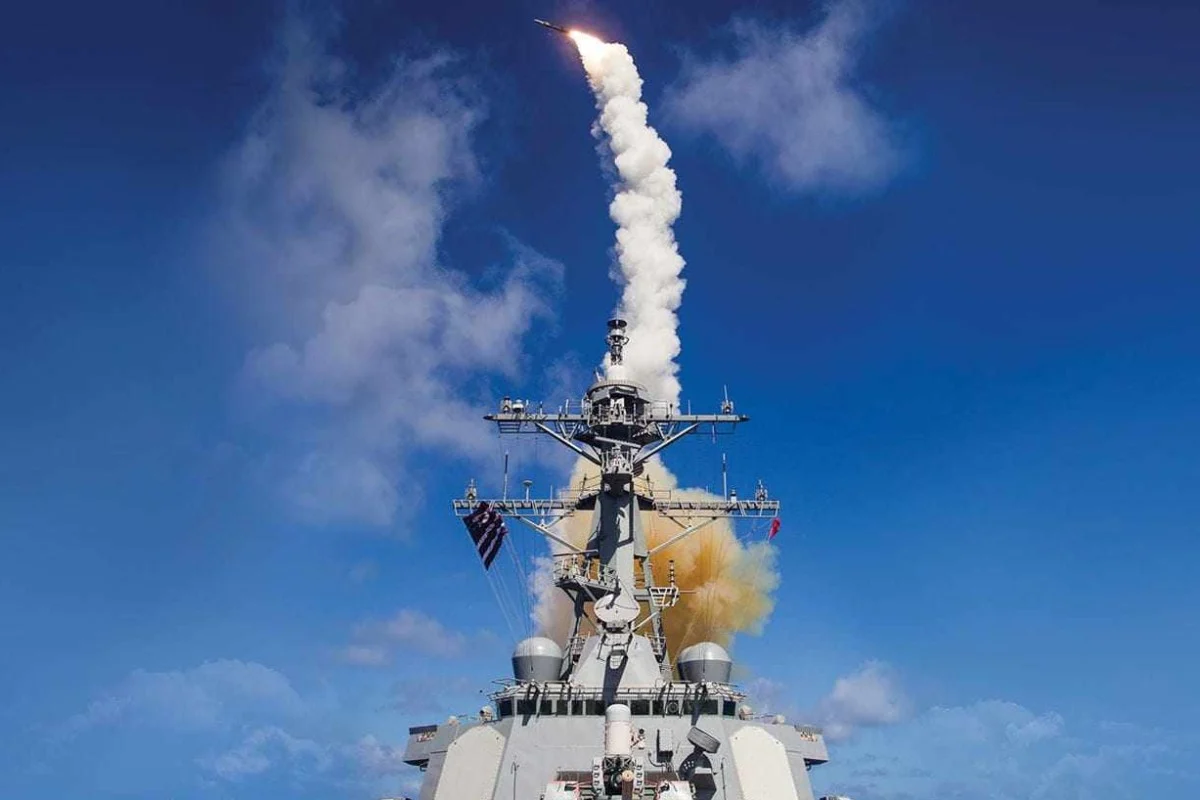
A U.S. Naval vessel testing an anti-air missile.
Combination warfare expands this idea beyond the battlefield. Callard and Faber explain that modern conflict combines conventional military power with non-military forms of war and above-military forms of war; they refer to this as “combination warfare,” where pressure comes from multiple directions simultaneously. A defender cannot protect every network, port, or public narrative at the same time. The result is overload and confusion. For example, cyber tools can shut down logistics or public services without firing a shot, forcing a stronger power to respond politically and economically, not only militarily. A state that cannot fight a naval fleet can still disrupt logistics, paralyze sensors, and challenge political will.
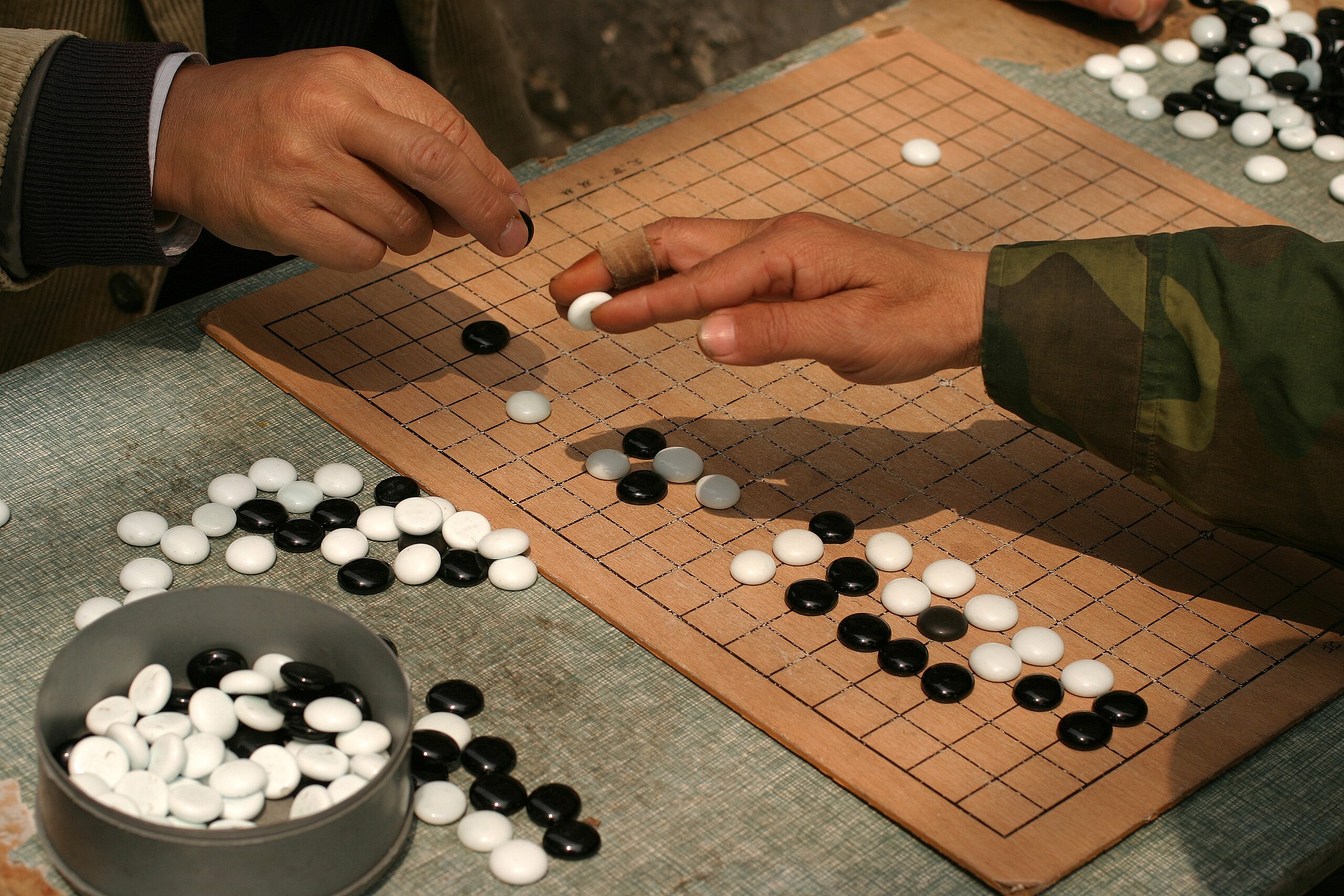
Strategic culture reinforces this approach. David Lai explains the Chinese concept of shi through the game of Go. In Go, victory does not come from one decisive battle but from shaping positions and forcing the opponent to overextend. China seeks a gradual positional advantage, not a rapid, decisive victory. Lai shows that advantage grows from shaping space, time, and perception. This logic fits asymmetric deterrence. A small state cannot match ships but can shape the environment. Coastal missiles restrict movement. Unmanned boats and drones complicate surveillance and targeting. Cyber defenses slow decision-making. Alliances and international law add political risk. Each layer forces the attacker to spend more time and resources and accept more uncertainty.
Integrated deterrence reflects the logic of strategic mismatch. Strong actors rely on rapid precision strikes, while weaker actors counter by disrupting sensors, jamming satellites, dispersing assets, and breaking the attacker’s plan.
Legitimacy, Information Resilience, and Political Cost
Legitimacy and narrative are parts of the same system. Power depends on perception. A strong military becomes vulnerable if it cannot justify its actions to its own public, allies, or neutral observers. A weaker actor can undermine the stronger power’s legitimacy just as effectively as it disrupts targeting or operations. When a small state survives, communicates, records attacks, or exposes violations of law, it changes the political cost of aggression. Borer refers to this as the political aspect of asymmetric conflict. This legal and moral resistance is the final layer: international law, documentation of strikes, transparent communication, and humanitarian restraint contribute to building credibility. If a weak state acts within a legal and moral frame, allies stay close, and public support remains strong. Once a strong power loses the moral narrative, escalation becomes politically expensive.
It [small maritime states] can create delay, confusion, and political embarrassment. Delay creates pressure, and the pressure creates restraint.
Information resilience is now a real form of defense. Russia launched “a wide-reaching, high-volume, and multichannel disinformation campaign” targeting Ukrainian soldiers, civilians, and international audiences. Ukraine responded through government institutions, civil-society organizations, and public education. They employed a tactic called “prebunking,” which involves exposing disinformation before it spreads. Helmus and Holynska conclude that Ukraine fought on three information fronts at once: the domestic population, the invading force, and the international community. This helped maintain morale, ensured support from partners, and prevented Russian narratives from dominating. Cognitive stability becomes part of deterrence by denying the attacker psychological leverage.
These ideas converge in small maritime states. A coastal defender cannot defeat a carrier group at sea, but it can interrupt the kill chain. It can deploy unmanned boats, decoys, jammers, cyber tools, and coastal missiles that force the attacker to search instead of strike. It can shape global opinion by documenting civilian harm and exposing disinformation. It can create delay, confusion, and political embarrassment. Delay creates pressure, and the pressure creates restraint.
Ultimately, modern deterrence is about disrupting systems. Weaker actors do not need to destroy ships or hold territory; they target the opponent’s ability to decide, coordinate, and justify. Brechbill focuses on machines, Callard and Faber focus on multi-domain pressure, Lai focuses on strategic position, Holynska on cognitive resilience, and Borer on alliances and legitimacy. These are different methods, but they share one principle: the strong lose advantage when the system breaks faster than platforms can win battles.
Conclusion
Weak actors continue to deter and sometimes defeat stronger militaries because power in modern conflict depends on sophisticated systems, not platforms. Classical asymmetric theory explains why determination, survival stakes, and strategic mismatch erode the advantages of superior forces. Scholars show that the weak turn time, morality, and creativity into weapons. These findings overturn the assumption that large militaries can always convert firepower into political outcomes. When the stakes are unequal, the side fighting for existence endures longer than the side fighting for limited aims.
Contemporary deterrence extends this logic into new domains. Weaker states no longer seek parity; they seek disruption. Brechbill shows that naval power collapses when the kill chain fails. Borer and Houck demonstrate that alliances create a networked shield where any strike risks regional escalation. Callard and Faber describe multi-domain pressure that turns logistics, sensors, and information into targets. Lai shows that positional advantage replaces decisive battles. Helmus and Holynska prove that information resilience protects morale, international support, and battlefield effectiveness. Together, these ideas reveal that the strong lose advantage when their system breaks faster than the weak can be destroyed.
Deterrence by denial is therefore a realistic strategy for small states. They can impose uncertainty through deception, cyber disruption, dispersed command, legal legitimacy, and narrative control. These tools raise the cost of aggression and deny the attacker a rapid victory. When a strong power cannot promise success without political damage, deterrence holds.
Force remains necessary but is insufficient on its own. Modern deterrence rewards coherence, adaptation, and legitimacy. The actor that shapes the environment controls escalation. In this era, the weak do not need to match the strong. They only need to make aggression uncertain, slow, and politically unrewarding. That is how small states survive in a world of great powers.
Check out all the great things Small Wars Journal has to offer.