





From Khorramshahr to Hezbollah: How Iran Learned to Win by Not Winning

Introduction: Redefining Victory
When Iranian forces retook Khorramshahr in May 1982, the Iran–Iraq War could have ended. Iraq signaled readiness for a ceasefire, Iran had reversed the invasion, and the strategic balance no longer justified escalation. Yet, Tehran chose to continue the war for six more years. This decision was not simply ideological stubbornness; it marked a decisive shift in how the Islamic Republic defined victory itself.
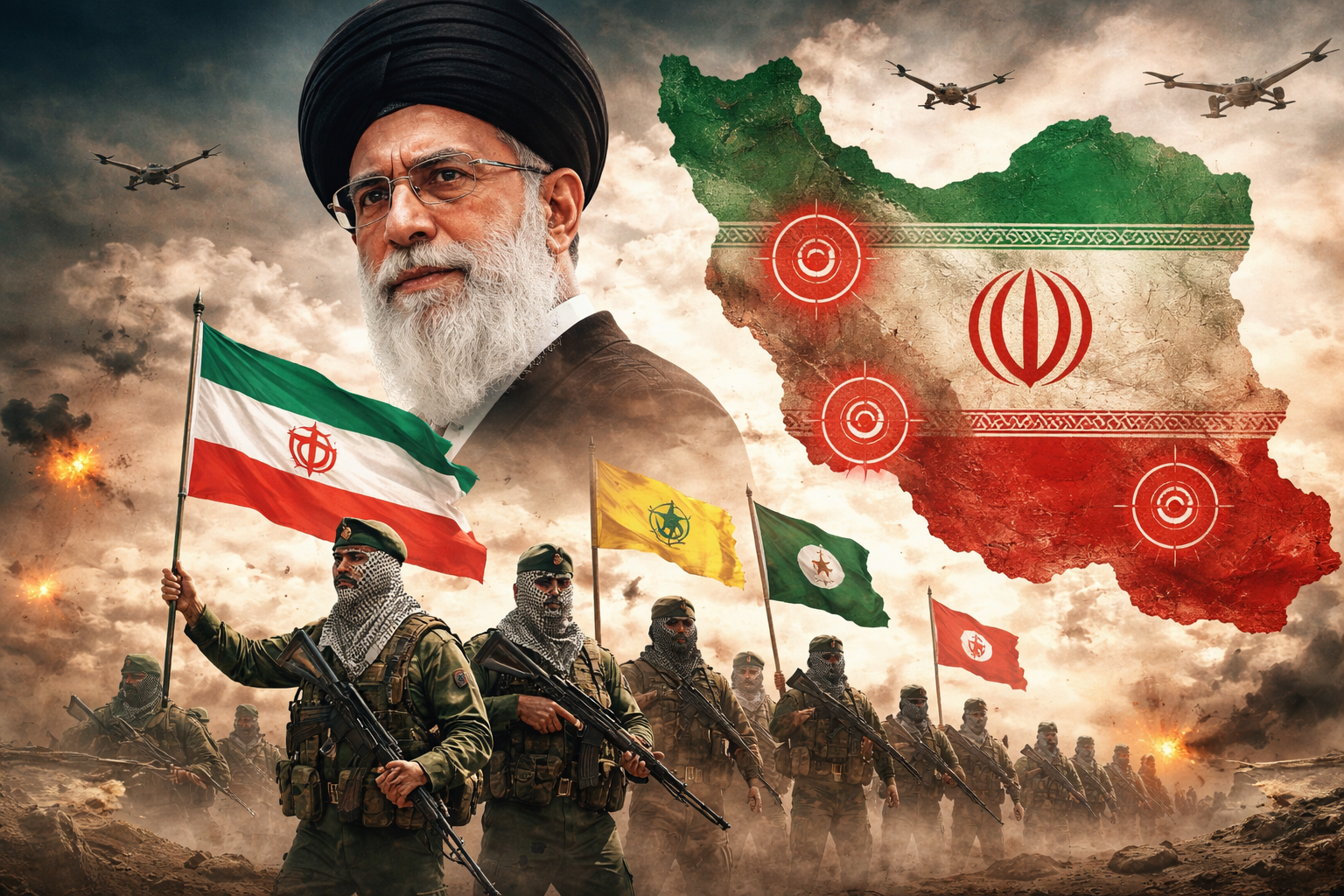
Survival, endurance, and ideological consolidation became substitutes for decisive military success. That redefinition of victory, born during the Iran–Iraq War, remains central to Iran’s strategic behavior today. From Hezbollah in Lebanon to Iranian-aligned militias in Iraq and Yemen, Tehran’s approach reflects a doctrine shaped not by triumph but by attrition, adaptation, and learning how to endure without winning outright.
Khorramshahr as a Strategic Turning Point
The early phase of the war exposed Iran’s vulnerability. The post-revolutionary purges of the regular army, the execution or dismissal of senior officers, and the rapid formation of the Islamic Revolutionary Guard Corps (IRGC) left Tehran ill-prepared for conventional conflict. Iraq’s initial advances were facilitated by Iranian disarray rather than Iraqi operational brilliance, as documented in multiple historical and policy assessments of the war.
Iran’s survival, however, became the war’s most consequential outcome. After Khorramshahr, Iranian leaders internalized a critical lesson: The regime could absorb extraordinary punishment so long as it mobilized society ideologically and framed endurance as moral victory. Territory became secondary to legitimacy; time became more valuable than maneuver.
This logic inverted conventional deterrence thinking. Losses no longer signaled failure; they became proof of righteousness and resistance.
IRGC Institutional Learning and Adaptation
The IRGC emerged from the war as an institution forged through improvisation rather than doctrine. Early reliance on human-wave assaults and mass casualties reflected material weakness, not strategic sophistication. Over time, however, the Guards learned to preserve manpower while maintaining pressure.
This transition, from expendable mass mobilization to force preservation, laid the groundwork for Iran’s modern proxy doctrine. Rather than confronting adversaries directly, Tehran learned to externalize risk, fight through intermediaries, and stretch conflicts across time and geography. The evolution of the IRGC into a transnational force with expeditionary capabilities has been well documented.
By the late stages of the war, Iran’s leadership was less focused on battlefield victory than on regime survival, internal consolidation, and the projection of influence beyond Iran’s borders.
Ideology as an Operational Asset
Ideology functioned as a military technology during the war. Iranian leaders framed combat as sacred defense, martyrdom as transcendence, and suffering as legitimacy. This narrative discipline allowed Tehran to compensate for material inferiority and suppress internal dissent under wartime conditions.
Crucially, ideology redefined defeat. Casualties did not undermine resolve; they reinforced it. Endurance itself became victory. This worldview continues to shape Iran’s strategic culture, frustrating Western deterrence models premised on rational cost-benefit calculations. Iran often interprets pressure campaigns as confirmation of its resistance narrative rather than incentives for restraint.
Hezbollah: The Model Outcome
Hezbollah represents the most refined application of Iran’s post-war learning. Unlike Iran in the 1980s, Hezbollah does not seek to defeat Israel militarily. It avoids decisive engagements, preserves its forces, and measures success by survival, deterrence, and narrative dominance.
The 2006 Lebanon War is instructive. Hezbollah did not achieve battlefield victory, but it survived. That survival was framed as success, strengthening Hezbollah politically and embedding it further into Lebanon’s security architecture. From Tehran’s perspective, this outcome validated a strategy of limited escalation and endurance.
Replication Across Multiple Theaters
Iran has replicated this model across the region. In Iraq, militias absorb pressure that Tehran avoids directly. In Syria, Iranian forces and proxies sustain conflict without seeking a decisive resolution. In Yemen, the Houthis impose strategic costs disproportionate to their capabilities. In the Red Sea, limited disruption creates global economic effects without triggering full-scale retaliation.
Across these theaters, Iran avoids “winning” wars because decisive victory would require responsibility, escalation control, and political compromise. Instead, Tehran seeks permanence: managed instability that exhausts adversaries over time. This approach aligns with assessments by the U.S. Defense Intelligence Agency and other policy institutions emphasizing Iran’s preference for indirect confrontation and strategic patience.
Implications for the United States and Its Allies
Western deterrence efforts frequently misfire against Iran because they assume shared definitions of success. Tehran does not seek decisive outcomes; it seeks survival, legitimacy, and time. Escalation designed to impose costs often reinforces Iran’s self-image as a besieged but righteous power.
Any effective strategy toward Iran must account for the regime’s formative experience during the Iran–Iraq War. The Islamic Republic emerged battered but intact and concluded that endurance itself confers legitimacy. Pressure alone, absent political strategy, risks reproducing the same cycle: escalation, endurance, and strategic stalemate.
Conclusion: Institutionalized Memory
The Iran–Iraq War was not merely a historical tragedy; it was the crucible in which Iran’s modern strategic doctrine was formed. From Khorramshahr to Hezbollah, Tehran learned how to survive without winning, how to fight without deciding, and how to endure without conceding.
Iran’s behavior today reflects continuity, not improvisation. Until policymakers recognize that Tehran measures success through survival rather than victory, its strategic logic will remain misunderstood, and its endurance underestimated.


