





Understanding Resistance and Mobilization in Mexico: Beyond the 2025 Gen-Z Contestation of Cartel-Led Governance
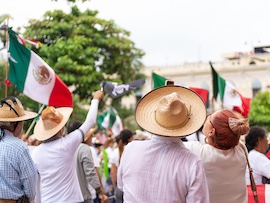

On 15 November 2025, thousands of demonstrators took to the streets in Mexico City[1] to protest cartel violence and government corruption, resulting in over 100 injuries, primarily among police officers. Several prominent media outlets attributed[2] these actions to domestic Gen-Z tied to global trends; meanwhile, the Mexican government claimed that right-wing political groups organized the protests, but the evidence contradicts both these claims. The most significant population organizing the demonstration were farmers from rural states, also evidenced by the fact that protests occurred[3] in the states of Guadalajara, Nuevo León, Michoacán, Aguascalientes, Chihuahua, Chiapas, and Oaxaca simultaneously[4] (and even previously for over a week)[5]. In fact, as clearly seen in many photos and videos of the events nationwide, the Movimiento Sombrero (Sombrero Movement) clearly played the larger and more organized role. So, what is truly happening in Mexico? We explore the conclusive metrics that depict the nature of Mexico’s resistance in 2025.
A History of Protest and Insurrection
Historically, there has perpetually existed a political divide in Mexico between the power brokers in the capital and the needs of the people in its 31 states. Over time, this division has resulted in multiple insurgencies and revolutions. It’s important to note that Claudia Sheinbaum previously served as the Mayor of Mexico City, as did the previous President Andrés Manuel López Obrador (AMLO). Although Mexico City ranks among the largest cities globally, boasting a population of 22.75 million, the belief that Sheinbaum serves the interests of the oligarchs in the capital resonated deeply on 1 November 2025, following the assassination of Carlos Manzo Rodríguez, the Mayor of Uruapan in Michoacán. Manzo was an outspoken opponent of both the cartels and the rampant government corruption. He had also publicly requested that Sheinbaum provide him protection from the cartels. Unfortunately, his plea[6] went unheeded.
In addition to one of the highest murder rates[7] on earth, political assassinations are a rampant phenomenon in Mexico, the government of which cannot enforce accountability. In January, we detailed the murder[8] of forty-three politicians and political candidates between July 2023 and June 2024 (see map below). Instead of recognizing the plea of farmers in Michoacán to enforce the rule of law, Sheinbaum blamed the 15N riots on her right-wing opponents.
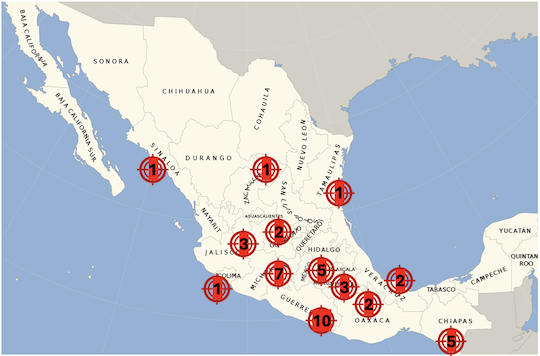
Figure 1. Political Assassinations in Mexico, July 2023-June 2024. Source: The Authors, https://www.tandfonline.com/doi/full/10.1080/1057610X.2025.2450847 .
Resistance in Mexico in 2024
In the past, Mexico’s protest culture, like much of the world, has been left-leaning. The founder of the socialist Morena party, López Obrador, was the first candidate to fully exploit social movements in the country, primarily those mobilized against state repression and forced disappearances. As cartels and the military became more deeply entangled in politics, protesting the government increasingly also meant protesting the cartels. Yet after his election, AMLO was not effective at reducing crime. The truth commission for the “Dirty War” and similar initiatives gained no traction, and the military quickly shut them down.
There have been a few far-right movements that protested against Morena—including Frente Nacionalista de México (FRENA),[9] composed of conservative elites—which have been widely mocked and socially isolated (FRENA portray[10] itself as nationalist defenders against a corrupt, narratives which combine class resentment, racial hierarchies, and authoritarian nostalgia). In recent years, grassroots movements have gained notable momentum, including the +43 Movement[11]—sparked by the disappearance of 43 Mexican students in Ayotzinapa—and influential feminist organizations mobilizing against femicide and sexual violence. Over the last decade, these alternative activist groups have grown in both scale and intensity, developing powerful iconography along the way. Despite popular support for President Sheinbaum, the trend of growing frustration with the government’s inability to enforce the rule of law is expanding.
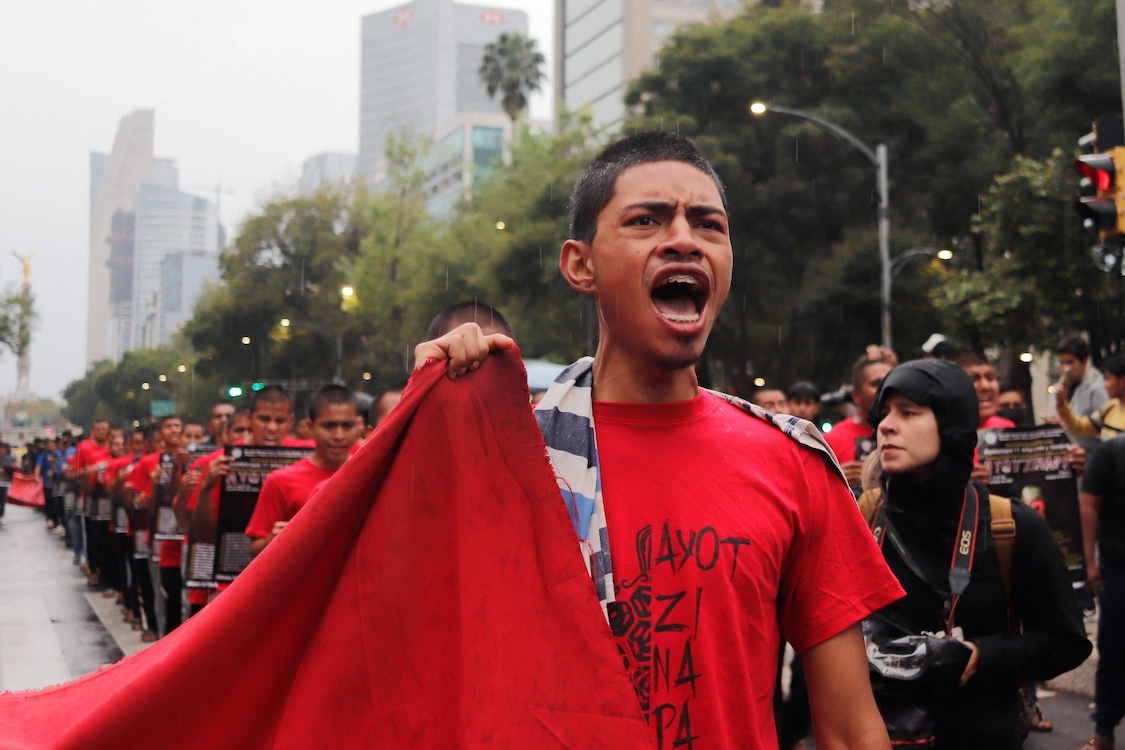
+43 Protestors in Mexico City on 26 September 2025. Source: Alamy (Under License).
Mexico remains one of the highest conflict zones in the world, which Armed Conflict Location and Event Data (ACLED) ranks as the fourth highest, just behind Palestine, Myanmar, and Syria. During the year 2024, intrastate resistance in Mexico included[12] 5,462 demonstrations or protests and 6,766 acts of political violence with 7,466 reported fatalities. While the capital receives considerable attention for its protest outbreaks, the states face considerably more resistance to governance, especially in the agricultural strongholds of Guerrero, Veracruz, Guanajuato, Sinaloa, and Michoacan, along with the industrial state of Nuevo Leon, which serves as a major center for the US auto industry. These statistics indicate that farmers and ranchers—such as those affiliated with Movimiento Sombrero—demonstrate a higher degree of resistance to the state than the Gen-Z–driven movements that have drawn attention in Mexico City. Furthermore, these figures indicate that political violence is significantly more prevalent in the states than in the capital. This is further illustrated in Table 1.
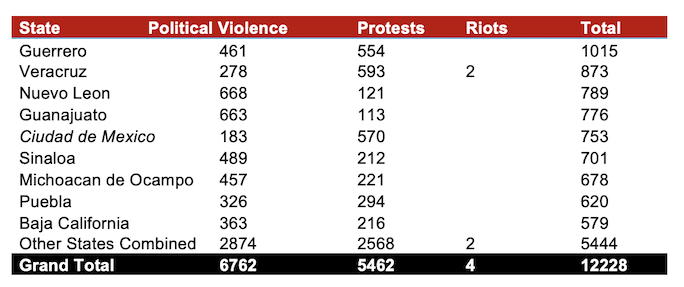 Table 1. Political Violence, Protests, and Riots in Mexico in 2024 by State. Source: The Authors (ACLED Data).
The major organizations operate along a continuum of resistance, challenging state authority in ways that range from advocating reforms to outright rejecting the rule of law. Using ACLED data, the most active groups can be identified, and the accompanying figure arranges them from left to right, beginning with legal and nonviolent actors—labor unions, students, women’s groups, educators, and farmers. Others employ extralegal tactics, such as the +43 Movement and feminist collectives like Bloque Negro. Illicit actors, including La Familia Michoacana and similar groups, frequently resort to violence against both rivals and the state. At the far end of the spectrum are the two major transnational criminal organizations, Cártel de Jalisco Nueva Generación (CJNG) and Cártel de Sinaloa (CDS), which directly compete with the state. As of now, no group possesses the capability or influence to confront the Mexican state as a true belligerent, leaving the far-right category empty.
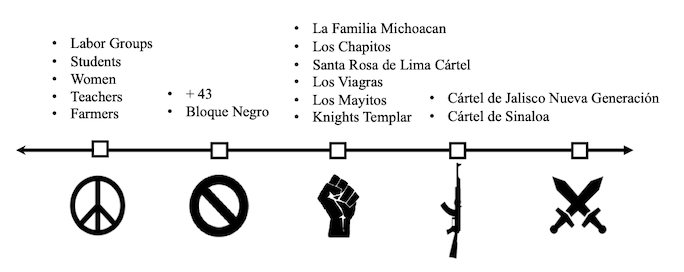 Figure 2. Mexico’s Resistance Continuum in 2024. Source: The Authors.
Resistance in Mexico in 2025
In 2025, resistance to governance is converging from various sectors, including drug cartels, corrupt officials, farmers, and even factions within the ruling party. This widespread dissent highlights the complex challenges facing the country’s political landscape. Mexico remains on the verge of a political or social explosion, particularly the divide between the states and the central government. These protests might not escalate into something larger, but they are representative of deeper geopolitical pressures—and of the internal realignment and contestation happening within Morena itself. Opposition parties have openly said that they plan to capitalize on Morena’s cannibalism even though they expect minimal outcomes.
The current wave of Gen Z resistance symbolism includes the pirate flag from ‘One Piece,’[13] which has been used in protests globally in 2025, including Indonesia[14], Nepal[15], Madagascar[16], Morrocco[17], Peru[18], and France[19]. Its adoption in the 15 November movements in Mexico City is not surprising. Latin America has long absorbed political “currents” from abroad. However, just like the events which caused the downfall of governments in Nepal, Madagascar, and Peru, these movements are all very unique, only adopting a universal symbol, not a universal cause. Similarly, some of the protestors on 15 November (in Mexico City in particular) displayed the One Piece symbol in unity with the global trend but with particular complaints about Mexico’s lack of governance.
When it comes to the assassination[20] of the mayor of Uruapan, Carlos Manzo, there are many competing narratives about his martyrdom. He was an independent who ran with Morena, later left the party, and became a political liability once he began speaking out against crime. The extent of his antagonism toward Morena is disputed—some claim he remained an ally, while others depict him as part of the opposition. As Sheinbaum tries to present herself as confronting crime, Carlos Manzo’s death demonstrates her inability to do so effectively. Within Morena, Sheinbaum has begun sidelining AMLO’s closest allies as corruption investigations have surfaced, including cases against the Secretary of the Interior Adán Augusto López[21] and the head of AMLO’s intelligence agency Audomaro Martínez[22].
An Unlikely Alliance
The collaboration of the Gen Z and Sombrero Movement in the 15N demonstrations represents one of the largest non-electoral protest waves in Mexico in recent years. According to the Government of Mexico City, cited by Milenio, approximately 17,000 people participated in the main march toward the Zócalo[23]. El Sol de México documented coordinated protests in more than 50 cities, estimating an additional 30,000–40,000 participants nationwide, with major flashpoints in Guadalajara, San Luis Potosí, Querétaro, and Veracruz[24]. Together, these reports place total participation between 45,000 and 55,000 people, excluding earlier localized demonstrations.
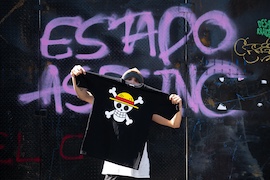
Gen Z Protester in Mexico City with ‘One Piece’ Pirate Flag on 15 November 2025. Source: Flickr (CC by 4.0), https://www.flickr.com/photos/eneas/54932910234/.
A week earlier, on 8 November 2025, the assassination of Uruapan mayor Carlos Manzo had triggered a separate mass rally drawing more than 60,000 people, according to EFE and CNN Español.[25] Although not part of the November 15 events, that march was the direct catalyst for the nationwide mobilization that followed. When both waves are considered together, the November protest cycle surpassed 100,000 participants nationwide, an extraordinary figure for grass-roots mobilization.
As an alternative measurement, La Jornada reported 4,000 participants in Nuevo León and Michoacán, 5,000 in Aguascalientes, and “more than 1,000” each in Chihuahua, Chiapas, and Oaxaca, while noting smaller crowds—fewer than 1,000—in the rest of the country. It also recorded 20,000 protesters in Jalisco.[26] Excluding Mexico City, this yields a national total of roughly 43,000–45,000, consistent with the El Sol de México range. These converging estimates place the likely scale of the 15 November demonstrations at 40,000–55,000 participants nationwide, excluding the 60,000 in Uruapan.
Comparative data from the Carnegie Endowment’s Global Protest Tracker[27] show that most Mexican protests in recent years have been significantly smaller. The Farmer Protests (2023) drew about 100 people; the Truckers’ Strike (2024) and Judicial Reform Protests (2024) about 1,000; while the Anti-AMLO and Feminist Protests (2020–2024) mobilized around 10,000 each. Only the Protect Democracy / INE Protest in February 2024 reached a genuinely mass scale with nearly 700,000 participants nationwide. In this context, the Gen Z / Sombrero mobilizations occupy a mid-to-upper tier: larger than most sectoral protests, comparable to feminist marches, yet far below the electoral-reform or pro-democracy mega-rallies.
Overall, the combined evidence from Milenio, El Sol de México, and La Jornada indicates that the Gen Z and Sombrero demonstrations constituted the largest public mobilization related to insecurity and political violence in Mexico since 2020. With 40,000–55,000 nationwide on 15 November and over 60 thousand in Uruapan, the protests rank among the five largest mass movements in Mexico between 2020 and 2025. They reveal how a localized act of political violence can ignite a decentralized, cross-generational national movement demanding accountability and security.
What Does the Alliance Want and Can it be Achieved?
The Gen Z protestors issued a 12-point Citizens’ Petition[28] calling for voter oversight, anti-corruption reforms, demilitarization of internal security, and the restoration of public trust through civic participation. This generational push[29] for transparency and accountability is specifically listed as follows:
- Establish citizen-initiated recall mechanisms to remove the president from office
- Replace officials with a direct citizen vote
- Prohibit partisan interference in voting
- Establish safeguards against corruption
- Create an independent citizen organization for the transparency of elections
- Create an independent body to audit elections
- Reform the justice system
- Improve indigenous and regional representation in Congress
- Demilitarize law enforcement
- Strengthen law enforcement with citizen oversight
- Include voices with moral authority in councils
- Consult with citizens to expand this petition
While the demonstrations received international recognition, observers remain divided over the long-term impact of the November 2025 protests. Some analysts, such as Enrique Krauze, warned that without a structured organization to articulate and sustain the Pliego Petitorio’s demands, the movement risks dissipating without tangible[30] results. Others, such as Lorenzo Cordoba (chairman of the National Electoral Institute and a significant organizer of democracy protests), denounced the government’s heavy-handed response as a display of force which exposed Morena’s authoritarian drift, demonstrated by footage[31] of police repression during the march. More broadly, Mexico’s democratic institutions have shown steady erosion since the López Obrador administration, amid what analysts describe as a growing polycrisis[32] of insecurity, institutional decay, and political polarization.
Public opinion presents a cautious yet critical perspective on the long-term effects of the protests. According to a Politico M[33] poll (on 28 November 2025), 37% of respondents believe the marches can produce meaningful change, while 38% think they may have an impact but only temporarily, and 25% argue that demonstrations need to be complemented by more substantive forms of resistance to be effective. Perceptions of government responsiveness to protest remain skeptical: 45% believe the administration should engage in dialogue and negotiate with protesters; 25% think Morena should address the underlying causes before implementing control measures; 16% emphasize the need to follow security protocols while avoiding excessive use of force; and 14% stress that the right to protest must be guaranteed.
In perspective, Gen Z accounts for roughly 30% of Mexico’s population but faces limited economic, social, and educational opportunities that undermine long-term human security. Rates of anxiety and depression have increased, and many young people struggle to secure formal employment, which is often scarce, low-paying, and lacks social protections. Even with higher education, access to decent jobs remains limited, and gender inequality exacerbates these challenges for women. More gravely, this generation is the most likely to suffer violence. In 2024, INEGI[34] reported 33,550 homicides nationwide, with 11,585 victims (34.5%) in the Gen Z population. From 2006–2025, over 53,000 of the 130,000 disappearances in Mexico were Gen Z victims, including 73.7% of missing women.
Conclusion
The November 2025 protests reveal a Mexico caught between deepening structural violence and an evolving landscape of civic resistance. While early narratives from media outlets and government officials miscast the demonstrations as either a Gen-Z phenomenon or a partisan maneuver, the evidence underscores a broader, more consequential reality: rural farmers, regional communities, and emergent youth coalitions together drove the largest non-electoral mobilization around insecurity in half a decade. The simultaneous eruptions across more than fifty cities, coupled with the unprecedented turnout following the assassination of Mayor Carlos Manzo, demonstrate that resistance to the state has expanded far beyond Mexico City’s traditional protest culture. It now includes constituencies historically marginalized from national decision-making and increasingly disillusioned by Morena’s inability to stem violence or corruption.
The alliance between Gen Z groups and the Movimiento Sombrero symbolizes a convergence of grievances—one rooted in rural collapse and state abandonment, the other grounded in generational precarity and exposure to endemic violence. Their demands, articulated in the Pliego Petitorio, signal not a revolutionary project but a civic one: demands for accountability, demilitarization, transparency, and meaningful participation in governance. Yet the prospects for lasting reform remain constrained by a fragmented protest ecosystem, the absence of durable organizational structures, and a federal government increasingly inclined toward centralization rather than consultation. Public opinion data likewise reflects this ambivalence: broad sympathy for the protesters’ message paired with skepticism over whether the state will listen.
Ultimately, the 15N protests should be understood not as an isolated moment but as a barometer of Mexico’s wider political destabilization. With violence rising, institutional trust eroding, and regional states bearing the brunt of an ungoverned security environment, Mexico stands at a critical inflection point. Whether the unlikely coalition forged in November can translate moral outrage into sustained civic pressure remains uncertain. But the movement has already exposed a truth the federal government can no longer ignore: resistance in Mexico is no longer confined to the periphery—it is now a national force shaped by farmers, students, women, workers, and young people who have the most to lose from a failing state, and the most to gain from demanding its renewal.
Endnotes
[1] Ioan Grillo, CrashOut: Inside the 15N Protests and Riots. Substack. 16 November 2025, https://substack.com/home/post/p-179095401.
[2] Associated Press, “Thousands protest crime and corruption in Mexico City as ‘Gen Z’ protests gain momentum.” CNN. 16 November 2025 (Updated), https://edition.cnn.com/2025/11/15/americas/genz-protests-mexico-sheinbaum-latam-intl.
[3] Nina Kravinsky, “Thousands Join ‘Gen Z’ Protests Across Mexico Against Crime and Corruption.” KJZZ – Fronteras Desk. 17 November 2025, https://www.kjzz.org/fronteras-desk/2025-11-17/thousands-join-gen-z-protests-across-mexico-against-crime-and-corruption.
[4] Letstown, “Marcha hacia Carlos Manzo en Zitácuaro, Michoacán.” Photograph, Own Work. 15 November 2025, https://en.wikipedia.org/wiki/File:Carlos_Manzo_marcha_Zit%C3%A1cuaro.webm.
[5] Max Saltman and Mauricio Torres, “Murder of popular mayor spurs violent protests in Mexican state.” CNN Americas. 4 November 2025, https://www.cnn.com/2025/11/04/americas/mexico-protest-mayor-murder-latam-intl.
[6] “Uruapan Mayor Carlos Manzo Shot, Killed During Day of the Dead Appearance.” ABC7 Los Angeles. 4 November 2025, https://abc7.com/post/uruapan-mayor-carlos-manzo-shot-killed-during-day-dead-appearance-president-sheinbaum-rules-changes-security/18109141/.
[7] “Murder Rate by Country.” World Population Review. n.d. (Accessed 15 December 2025),https://worldpopulationreview.com/country-rankings/murder-rate-by-country.
[8] Robert S. Burrell and Manuel Carranza, “Are Mexican Cartels Terrorists? Why Understanding Resilience and Resistance in Mexico Matters.” Studies in Conflict & Terrorism. 2025: pp. 1–37, https://doi.org/10.1080/1057610X.2025.2450847.
[9] David Pavón-Cuéllar, “La nueva ultraderecha latinoamericana (1992-2018).” Marxismo Crítico. 26 June 2018, https://marxismocritico.com/2018/06/26/la-nueva-ultraderecha-latinoamericana/.
[10] Abraham Trejo and Gabriela Cruz. Telegram es campo fértil para el odio: el caso FRENA. Serie “Construcción del odio en redes sociales,” Informe No. 6. Coordinación del Seminario sobre Violencia y Paz: Sergio Aguayo. Seminario sobre Violencia y Paz (SVyP) de El Colegio de México – Proyecto Odio y Concordia, 3 de mayo de 2021, https://violenciaypaz.colmex.mx/archivos/UHVibGljYWNpb24KIDE0CmRvY3VtZW50bw==/POyC_Construcción_del_odio_Informe_6.pdf.
[11] Alma Guillermoprieto, “Forty-Three Mexican Students Went Missing. What Really Happened to Them?” The New Yorker. 4 March 2024, https://www.newyorker.com/magazine/2024/03/11/what-really-happened-to-the-forty-three.
[12] Armed Conflict Location & Event Data Project (ACLED). n.d. (Accessed 8 December 2025), https://acleddata.com/.
[13] BBC World Service, “How an anime pirate flag became a protest symbol.” What in the World (Weekend Edition Sunday). 2:02 Minute Video. 16 October 2025, https://www.youtube.com/watch?v=EfVoArmSk1o.
[14] Kelly Ng, “How a cartoon skull became a symbol of defiance in Indonesia.” BBC News. 6 August 2025, https://www.bbc.com/news/articles/c3ezvj4d111o.
[15] Lex Harvey, “Gen Z protesters are uniting behind a manga pirate flag.” CNN. 20 September 2025, https://www.cnn.com/2025/09/19/asia/one-piece-flag-indonesia-nepal-protesters-intl-hnk-dst.
[16] Nora Litoussi and The FRANCE 24 Observers, “One Piece manga revolt protests in Asia-Pacific.” France 24. 6 October 2025, https://www.france24.com/en/asia-pacific/20251006-one-piece-manga-revolt-morocco-indonesia-nepal-madagascar.
[17] Kate Bartlett, “Why Gen Z protesters worldwide are flying an anime pirate flag.” NPR World / Weekend Edition Sunday. 5 October 2025, https://www.npr.org/2025/10/05/nx-s1-5560980/gen-z-protesters-one-piece-pirate-flag.
[18] Victoria Valenzuela, “Youth protesters ousted Peru president not done.” Waging Nonviolence. 18 November 2025, https://wagingnonviolence.org/2025/11/youth-protesters-ousted-peru-president-boluarte-not-done/ and CNN Español / EFE, “Manifestación en Uruapan tras asesinato del alcalde Carlos Manzo.” CNN Español / EFE. 8 November 2025, https://cnnespanol.cnn.com/2025/11/08/mexico/manifestacion-uruapan-asesinato-alcalde-carlos-manzo-efe.
[19] Michaël Szadkowski and Pauline Croquet, “The ‘One Piece’ flag finds its place in protests across France.” Le Monde. 20 September 2025, https://www.lemonde.fr/en/pixels/article/2025/09/20/the-one-piece-flag-finds-its-place-in-protests-across-france_6745567_13.html.
[20] CBS News Staff and Associated Press, “Suspect arrested in assassination of Mexican mayor who pushed government to tackle violent crime.” CBS News. 19 November 2025, https://www.cbsnews.com/news/suspect-arrested-assassination-mayor-mexico-carlos-manzo-uruapan/?utm_source=chatgpt.com.
[21] MND Staff, “Opposition formally accuses AMLO’s ex-interior minister of ties to Tabasco crime gang.” Mexico News Daily. 31 July 2025, https://mexiconewsdaily.com/news/adan-augusto-lopez-tabasco-la-barredora/.
[22] Tim Golden, “Inside the Risky U.S. Probe of Allegations That Drug Mafias Financed a Campaign of Mexico’s President López Obrador.” Propublica. 19 July 2024, https://www.propublica.org/article/mexico-amlo-dea-probe-cartel-campaign-donations#.
[23] Armando Martínez, “¿Cuántas personas asistieron a la marcha de la Generación Z en CdMx?” Milenio. 15 November 2025, https://www.milenio.com/comunidad/cuantas-personas-asisitieron-a-marcha-de-la-generacion-z-en-cdmx.
[24] Wendy Vega, “Movimiento del Sombrero y Generación Z se unen en protesta nacional contra el gobierno.” El Sol de México. 15 November 2025, https://oem.com.mx/elsoldemexico/mexico/movimiento-del-sombrero-y-generacion-z-se-unen-en-protestas-nacional-contra-el-gobierno-26809096.
[25] EFE, “Más de 60.000 personas se manifiestan en Uruapan tras el asesinato del alcalde Carlos Manzo.” CNN Español. 8 November 2025, https://cnnespanol.cnn.com/2025/11/08/mexico/manifestacion-uruapan-asesinato-alcalde-carlos-manzo-efe.
[26] Socorro Martínez Ortiz and Ruth Zavaleta Salgado, “Marcha de la Generación Z en México.” La Jornada / ljz.mx. 21 November 2025, https://ljz.mx/21/11/2025/marcha-de-la-generacion-z-en-mexico/?utm_source=chatgpt.com.
[27] Global Protest Tracker, Carnegie Endowment for International Peace. n.d. (Accessed 15 December 2025),https://carnegieendowment.org/features/global-protest-tracker?lang=en.
[28] Redacción Línea Política, “Generación Z presenta pliego petitorio previo a la marcha del 15 de noviembre; estas son sus exigencias.” Línea Política. 14 November 2025, https://lineapolitica.com/generacion-z-presenta-pliego-petitorio-previo-a-la-marcha-del-15-de-noviembre-estas-son-sus-exigencias/.
[29] “Marcha de la Generación Z en México.” La Jornada Zacatecas. 21 November 2025, https://ljz.mx/21/11/2025/marcha-de-la-generacion-z-en-mexico/.
[30] Enrique Krauze, “Juventud agraviada: La generación Z no parece estar dispuesta a perder el futuro. Ojalá se organicen y articulen sus demandas.” Letras Libres. 24 November 2025, https://letraslibres.com/politica/enrique-krauze-juventud-agraviada/.
[31] Lorenzo Córdova, “Las crisis sólo revelan la verdadera esencia autoritaria de la 4T.” Latinus Opinión(podcast/column). 25 November 2025, https://latinus.us/mexico/2025/11/25/en-opinion-de-lorenzo-cordova-las-crisis-solo-revelan-la-verdadera-esencia-autoritaria-de-la-4t-157819.html.
[32] Vanessa Rubio-Márquez, “Mexico’s Fork in the Road: Rule of Law or Authoritarian Shift?” Freedom and Prosperity Around the World 2025 (Washington, DC: Atlantic Council). 7 March 2025,https://www.atlanticcouncil.org/in-depth-research-reports/books/mexicos-fork-in-the-road-rule-of-law-or-authoritarian-shift.
[33] Politico MX Poll Team, “¿Marchar en México: movimiento social o desahogo colectivo?” Politico MX Polls.28 November 2025, https://polls.politico.mx/2025/11/28/marchar-en-mexico-movimiento-social-o-desahogo-colectivo/.
[34] Ruth Zavaleta Salgado, “Los del sombrero de paja: La Generación Z representa 30% de la población.” Excélsior Opinión. 15 November 2025, https://www.excelsior.com.mx/opinion/ruth-zavaleta-salgado/los-del-sombrero-de-paja/1751860.



