Is Israeli Maritime Nuclear Supremacy a Challenge to Iranian Influence in the Eastern Mediterranean?
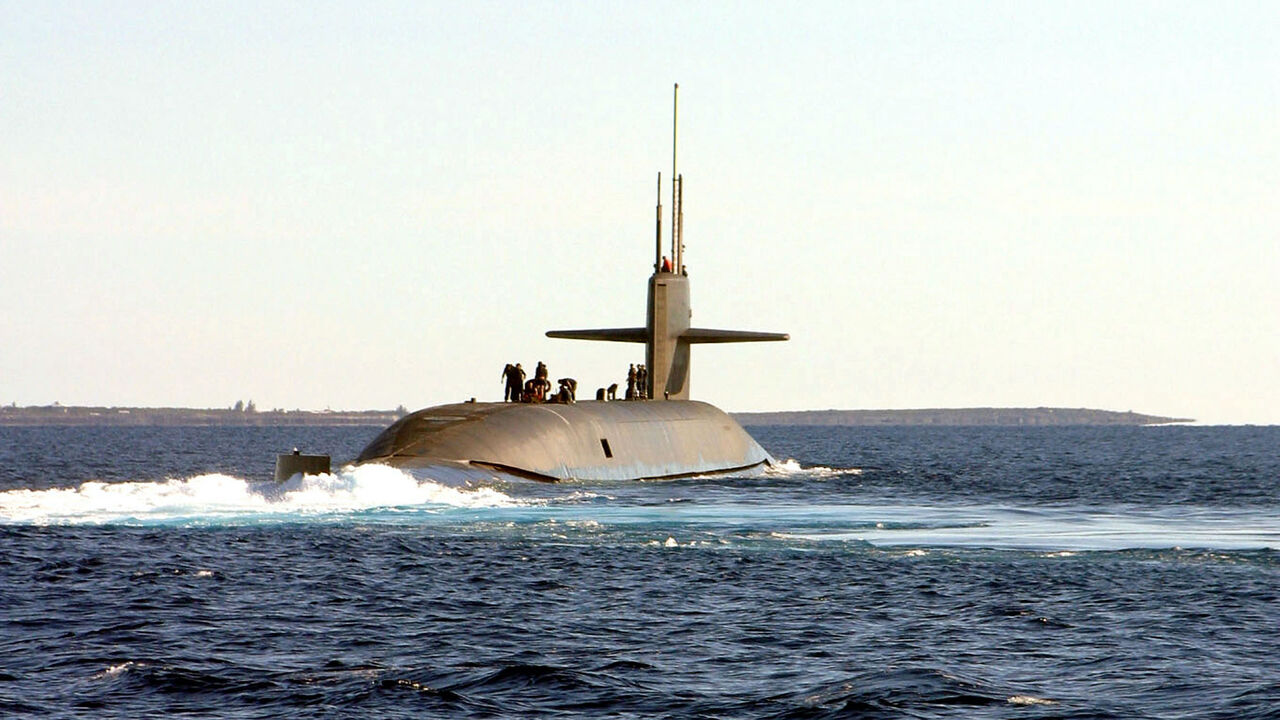

For decades, nuclear deterrence in the Middle East has been discussed terrestrially. It has focused on missile ranges, underground facilities, and escalations in the theatre. However, the international community must both strategically and legislatively understand the transformation of Israel’s nuclear-capable submarine fleet – which creates a power vacuum that Israel has usurped via a maritime deterrent – that Iran (the only viable opponent in the region) has failed to project Israel’s influence over international waters.
The Origination & the “Submarine Deterrent”
Israel’s submarine program initially began in the late 1950s, whereby two British S-class submarines were retired and paved the way for German-built Gal- and Dolphin-class vessels. This, therefore, culminated in a long-range fleet, with potentially nuclear-capable operations in the Mediterranean. The word ‘potentially’ presents ambiguity, due to the covert strategic theory behind Israeli deterrence. This theory has been physically implemented in the Dolphin-II vessels since the 2010s, in which there is “consistent speculation that Israel’s submarines have been refitted to carry missiles armed with nuclear weapons … to maintain a survivable second-strike option.” As a result, the extension of deterrence into the maritime domain has given Israel a mobile platform that is immune to first-strike vulnerabilities. In the last three decades – especially since the 1991 Gulf War – the Eastern Mediterranean has emerged as a strategic theatre where energy politics, military competition, and great-power interests converge into a single equilibrium that is not equal, but rather unstable, with the Iranians. Thus, there are reasonings that the Mediterranean theatre is as geopolitical as it is technical.
The Importance of the Mediterranean
There are three reasons why the Sea has become central to Israeli nuclear-maritime strategy.
- Operational depth. The act of being present in the “shadows” gives concealment.
- The basin’s geography connects the Levant to NATO’s southern flank near Türkiye, therefore putting Israel’s deterrence within Europe’s security theatre.
- The Mediterranean is a platform of signaling. Deploying Dolphin II would be a show of force in relation to resolve and capability. This is particularly true of adversaries like Iran, whose military influence is primarily proxy-based through Hezbollah, Hamas, etc.
Iran’s Maritime Ambitions
Tehran’s maritime strategy has, historically, centered on the Persian Gulf and Strait of Hormuz. However, in the last decade or so, Iran’s pivot from using horizontal tactics (proxy control, projecting power outward) and transitioning into a more vertical stance (regaining strategic credibility) includes using the Mediterranean more frequently. An example of this is in 2011, when the Iranian Navy made a rare deployment to the Mediterranean Sea, conducting a port visit in Latakia. Recently, this year, the repositioning of five U.S. ballistic missile defense-capable, guided-missile destroyers occurred due to Iranian forces continuing to fire ballistic missiles at Israeli targets in retaliation for ongoing Israeli strikes on Iranian targets during Operation Rising Lion. This has been confirmed more recently by Major General Papkour, Commander-in-Chief of the IRGC, in his explanation that any move by enemies in the sea will be met with a full and forceful response. This will link Iran and its allies from the Gulf to the Levant. However, Iran does need to continue modernizing its navy away from a green-water navy and into a blue-water naval capacity, demonstrating that there are structural limits. This includes its outdated vessels and the fragmentation of its proxies since the end of the Syrian Civil War, which has impacted its control of Syrian ports, including Latakia. Hence, presently, Israeli submarines nearby nullify Iran’s naval capacity to sustain maritime influence.
Strategic Deterrence at Sea & Implications for International Waters
Israel’s maritime deterrence is not designed for day-to-day coercion. Rather, it is designed existentially in that Israel can credibly threaten second-strike retaliation from the Mediterranean, while Iran cannot reciprocate at sea. Furthermore, it constrains Tehran’s maritime calculations, as Iranian naval commanders must weigh the risk of escalation against a nuclear-armed adversary that is capable of naval precision-retaliation from an undisclosed position, which rebalances regional deterrence dynamics. For the European Union, the U.S., and regional partners like Egypt and Greece, Israel’s nuclear deterrent enables the existence of a stabilizing entity that limits Iranian maritime projection. Since the 12 Day War this year, the weakening of Iranian nuclear capabilities has forced Iran to rely on Ghadr-380 anti-ship cruise missiles for small vessels.
Regional Developments
Israel’s gas ownership of the Leviathan, Tamar, and Karish gas fields has made the Eastern Mediterranean an attractive center of energy and security interests. As a result, protecting these assets means invigorating maritime capabilities, and Israel has customarily done this via its nuclear submarine fleet, deterring damaged Iranian influence operations via Hezbollah, Hamas, and Iraqi and past Syrian proxies. This is an extension of the projection of Israel’s maritime supremacy beyond its coastline. Turkey, Egypt, and Greece are rapidly modernizing their naval fleets to assert dominance and capitalize on the gas fields, encroaching into Israeli control. Egypt alone added two Mistral-class assault ships in 2016 and two FREMM frigates by 2020, signaling its strategic ambitions. This will be a challenge for the Israeli high command to contain, as well as to prevent any alliances with Iran, considering international condemnation and breakdown of diplomacy in relation to the war in Gaza.
Conclusion
It could be largely argued that Israel’s maritime nuclear capability has reshaped Eastern Mediterranean security through linking deterrence, energy protection, and geopolitical signaling. In addition, a submarine-based, second-strike capacity gives Israel a mobile deterrent that contains offshore gas assets against Iranian-backed proxies, forcing Iran to follow a vertical stance. Tehran’s navy is limited due to its blue-water capability, as well as its dependence on weakening ports, revealing that it cannot ensure sustained power projection over the Eastern Mediterranean compared to other navies such as Turkey, Egypt, Libya, and Lebanon. Due to Israel’s ambiguity, these other navies might answer with imminent force, both militarily and politically. However, the war in Gaza could be used as a casus belli to exert pressure by bolstering the surviving elements (including Kataib Hezbollah in Iraq) and arm them with anti-ship missiles, or fire from an inland site using Qadr-110, Qadr-380, and Qadir missiles against naval targets in the Sea of Oman, possibly extending to the Eastern Mediterranean. Besides this, Iran can use Israeli encroachments to get more remorse and support from the international maritime community. As a result, this grey-zone, sea-based warfare and the friction that comes alongside it may enable Iran to continue uranium enrichment and manufacturing nuclear-enabled submarines against Israel, posing proliferation risks.
Check out everything Small Wars Journal has to offer.