





If War Returns to Gaza, Israel Should Try Counterinsurgency
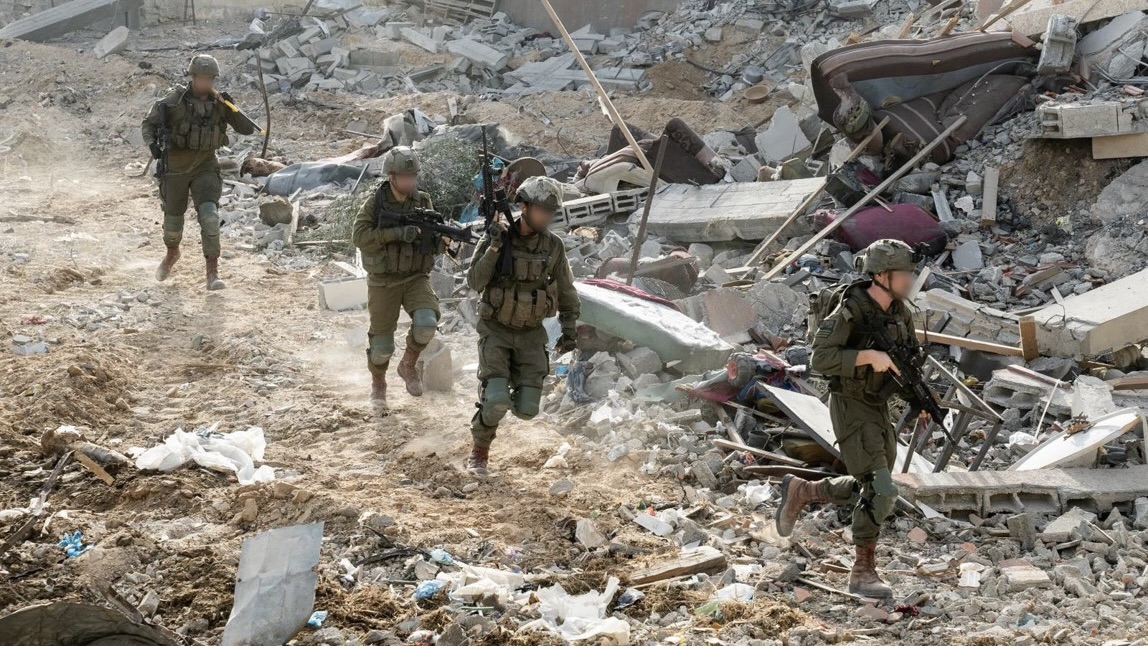

The long-awaited Gaza cease-fire represents great hope but has left Hamas armed, rejecting disarmament, and engaging in a low-intensity civil war which it appears to be winning. If Hamas does not agree to disarm and exit Gazan politics – something Hamas has rejected repeatedly – Israel may renew its war to eliminate Hamas. To date, Israel’s military campaign has failed to destroy Hamas; they have simply regrouped in the power vacuum left by Israel’s clearing operations. Counterinsurgency – when conducted as interminable search-and-destroy without creating any governing body in cleared areas – is guaranteed to fail; Hamas is living proof of this.
If the war resumes, the formula for eliminating Hamas and bringing peace to Gaza is found in point 17 of the 20-Point Peace Plan for Gaza: “In the event Hamas delays or rejects this proposal, the above [i.e., the first 16 points], including the scaled-up aid operation, will proceed in the terror-free areas handed over from the IDF to the ISF.” [Emphasis added.] By proposing that the International Stabilization Force (ISF) secure the cleared areas during conflict, the diplomats have reinvented the “Oil Spot” or “Ink Spot” Strategy of counterinsurgency. Given Hamas’ unpopularity both before the war and today, the inferior miliary strength of the competing factions, and above all the ISF task of governing unarmed or disarmed people in cleared areas, this strategy is likely to succeed. Under the protection of the ISF, the desired indigenous, technocratic, non-Hamas government can flourish in Gaza before Hamas disarms—voluntarily or otherwise. This is counterinsurgency.
The remaining question is the composition of the ISF, without which the recommended counterinsurgency strategy is useless. Indonesia – given UN backing, and various Islamic countries still in negotiations – have conditionally volunteered to contribute to such a force, although only for peacekeeping and not to fight Hamas. If war returns to Gaza, such a force governing cleared areas is vastly more likely to achieve a satisfactory peace than would be achieved through the resumption of perpetual Israeli search-and-destroy missions or continued Hamas consolidation of its hold on Gaza.
Counterinsurgency Abhors a Vacuum
Through two years of war, Israel has shown virtually no inclination to govern areas of Gaza cleared by the military (although it has been suggested). Israel has cleared many areas within Gaza multiple times. Hamas reconstituted itself in northern Gaza – e.g. Jabaliya – where even the Israeli military says militants have repeatedly regrouped after major operations. Furthermore, Hamas has been allowed sanctuary within Gaza; Dier-al-Balah was uncontested for over a year of the war.
Israel’s plan (or hope) that a pure search-and-destroy campaign would lead to Hamas’ demise has been demonstrated to be ineffective. Israel’s wildly optimistic calls for the unarmed people of Gaza to overthrow Hamas – namely Defense Minister Israel Katz’s call on Gaza residents to “expel Hamas and return all hostages,” – had no apparent effect. Israeli- armed gangs are a pale imitation of a professional police and military force and, as current events show, are more likely to add civil war to the misfortunes of the Gazans than to eliminate Hamas. Pure search-and-destroy is a formula that has failed in the fight against Hamas. Counterinsurgency requires governance.
On Counterinsurgency and Governance
In counterinsurgency theory, success ranges across a spectrum from good governance to massive and even indiscriminate coercion. Official US counterinsurgency doctrine emphasizes quality of governance:
While security is essential to setting the stage for overall progress, lasting victory may come from a vibrant economy and political participation that restores hope. Particularly after security has been achieved, dollars and ballots may have more important effects than bombs and bullets.
In a significantly contrasting approach, which Jacqueline Hazelton labels “compellence theory” in “Bullets Not Ballots,” she finds:
… success of a counterinsurgent has three requirements. The first is the government’s relative low-cost accommodation of elite domestic rivals—that is, political actors such as warlords and other armed actors, regional or cultural leaders, and traditional rulers—to gain fighting power and information about the insurgency. The second requirement is the application of brute force to reduce the flow of resources to the insurgency, often but not always and certainly not only by controlling civilian behavior with brute force. The third requirement is the direct application of force to break the insurgency’s will and capability to fight on.
Clearly, the proper placement of a counterinsurgency campaign along the “carrot and stick” spectrum is a matter of some debate. In what might be considered an overarching framework presented in “The Object Beyond War,” McFate and Jackson argue: “In any struggle for political power there are a limited number of tools that can be used to induce men to obey. These tools are coercive force, economic incentive and disincentive, legitimating ideology, and traditional authority.” The document goes on to say: “The civilian population will support the side that makes it in its interest to obey,” and then:
Beating the opposition requires that counterinsurgency forces make it in the interest of the civilian population to support the government. How? To win support counterinsurgents must be able to selectively provide security—or take it away. Counterinsurgency forces must become the arbiter of economic well-being by providing goods, services, and income—or by taking them away. Counterinsurgency forces must develop and disseminate narratives, symbols, and messages that resonate with the population’s preexisting cultural system or counter those of the opposition. And, finally, counterinsurgents must co-opt existing traditional leaders whose authority can augment the legitimacy of the government or prevent the opposition from co-opting them.
Therefore, along the spectrum of counterinsurgency theory, from advocating social services to emphasizing effective coercion, there is always a powerful and controlling government. This trivial-sounding observation has been conspicuously absent within the Israeli campaign in Gaza. By failing to provide security and economic well-being via any alternative government, Israel cannot differentially allocate (or allocate at all) the benefits of security or economic well-being to non- or anti- Hamas groups. Elites cannot be bribed or coerced (or both) into supporting the military forces against the guerrillas. Israel cannot guarantee the safety of anti-Hamas forces. During the first two years of war, the lack of security allowed Hamas to liquidate any Israeli-favored candidates for local governance. Hamas continues to liquidate its opponents during the current cease-fire.
By failing to provide security and economic well-being via any alternative government, Israel cannot differentially allocate (or allocate at all) the benefits of security or economic well-being to non- or anti- Hamas groups.
By contrast, the ISF (even a peacekeeping force) would consist of armed forces from volunteering powers. A peace-keeping force (subsequently augmented by trained indigenous police) would shield civil society in the cleared areas. Residents could be given IDs, as in the Turkish Kilis refugee camp, without any affront to their dignity. By possessing greater force than any disarmed remnants of Hamas, the clans, or the “gangs” allowed into the cleared areas, and by freeing the governed civilians of the blockade afflicting the combat areas of Gaza, the ISF (and later indigenous local government) would cover both ends of the “carrot and stick” spectrum of counterinsurgency techniques.
A Historical Parallel
Given Hamas’ actions of October 7th, Nazi Germany may be an appropriate analogy. As in Gaza, there was vast destruction inflicted upon Germany. However, the US and UK forces did not merely destroy German units and pass through; the US and UK established a military government. Indigenous civil government came later. To quote Richard Bessel, “Their emergence from Nazism and war into a peaceful and prosperous postwar world had much to do with the fact that for years after May 1945 the Germans were not allowed to govern themselves.”
While it may not take years, it will require some amount of time to establish rule of law amidst the lawlessness, chaos, and civil war in Gaza. Only an external force can stop this ongoing civil war between Hamas, the clans, and armed gangs. It should be remembered that Hamas’ current rule was the result of their victory during the last civil war in Gaza in 2007.
Montesquieu on Gaza
“The best is the mortal enemy of the good.”
–Montesquieu
Ideally, the ISF would create peace in Gaza by filling in the power vacuum behind IDF clearing operations. In practice, two major obstacles remain. First, the delays in deploying the ISF are giving Hamas time to consolidate its violent antidemocratic rule in Gaza, as above. Second, Arab and other states desiring peace in Gaza are reluctant to intervene against Hamas in Gaza if the intervention appears to lack legitimacy or involves major combat operations against Hamas.
Any ISF component securing cleared areas of Gaza should be created immediately as it would create a visible alternative to Hamas. Waiting for the optimum arrangement of the ISF before stopping Hamas’ killing spree is counterproductive; the best is the mortal enemy of the good.
Fiddling While Rome Burns
In RAND’s “Seizing the Golden Hour,” James Dobbins and others find that “Establishing security is absolutely critical in the earliest phases of such [post-conflict] operations.” Speaking from a US point of view which generalizes to virtually any post-conflict situation, the RAND authors find:
When U.S. forces first arrive in a post-conflict context, they have the opportunity to reassure potential allies and to both deter and co-opt potential enemies. If they fail to do so, armed opposition networks have the opportunity to solidify; these potential spoilers, although relatively susceptible to co-option and vulnerable to disruption in their nascence, typically become disproportionately more difficult to win over or defeat if they are allowed to reach maturity.
The world is witnessing Hamas “solidifying” its position in Gaza daily. Israel is neglecting the first priority to prevent the armed opposition from consolidating. Immediate deployments of any ISF forces to cleared areas would at least provide sanctuary areas for non- and anti- Hamas elements. The estimated requirements of 1,000 soldiers and 150 police for each 100,000 residents implies that Indonesia’s proffered 20,000 soldiers would be sufficient for almost the entire 2,100,000 population of Gaza. Obviously, “starting small” in cleared areas of Gaza would initially require far fewer troops and police.
The more time Hamas has to organize itself and purge Gaza of opposition, the more costly and more likely to fail will be any campaign to remove Hamas from the governance of Gaza—point 13 of the aforementioned 20-point peace proposal. Accelerating the ISF’s deployment without a thoroughly vetted mission and unambiguous lines of authority will no doubt cause significant friction and inefficiency. However, this is a race against time and a race against Hamas as it kills its opponents. Any ISF component securing cleared areas of Gaza should be created immediately as it would create a visible alternative to Hamas. Waiting for the optimum arrangement of the ISF before stopping Hamas’ killing spree is counterproductive; the best is the mortal enemy of the good.
Composing the ISF
The second obstacle to forming the ISF is creating a legitimized coalition engaged in peace-keeping, not combat. Creating the ISF may prove impossible if peace must be created or enforced, e.g. by the ISF itself disarming Hamas. Even Indonesia’s 20,000 troops are contingent on a UN decision. The Arab states desire “Palestinian approval.” However, there is no representative body to approve any plan for the Palestinians of Gaza. The Palestinian Authority has ruled by decree, defanging the judiciary and purging its rivals. Hamas has never held any elections and has ruled by oppression and terror. Without any representative Palestinian body, awaiting “Palestinian approval” for creation of the ISF is impossible. ISF-provided security is required to create the conditions in which a representative body for Gazans can arise. Arab states might yet agree to this; if ISF control of Gaza replaced Israeli control outside “the yellow line,” it would become a purely peace-keeping mission and facilitate a new Gaza, not assist an Israeli occupation. The alternative “best” option, receiving Palestinian approval before creating the ISF, may be ideal in some theoretical sense, but no such approval is available in reality. The best is once again the mortal enemy of the good.
Conclusion
The pure strategy of search-and-destroy, without any governing authority created in cleared areas, has brought futility and worldwide condemnation to Israel and unparalleled destruction in Gaza. The much-lauded cease-fire currently brings civil war to Gaza as Hamas destroys its opponents and refuses disarmament. If Hamas and the clans subsequently agree to disarm and leave politics, that would be a welcome – if uncharacteristic – surprise. If Hamas refuses to disarm, then the war must be won by adopting an “Oil Spot” strategy, with the ISF protecting civilians in areas cleared of Hamas by the IDF. Only within such protected areas can an indigenous technocratic government arise, freed from war and economic blockade. In the 20-Point Peace Plan, the ISF and the technocratic government exist regardless of whether Hamas chooses to disarm or is militarily destroyed. Therefore, ISF protection and some governance should start in any cleared areas as soon as possible, as this would create a visible alternative to Hamas. Counterinsurgency abhors a vacuum; the ISF can fill this vacuum, allow indigenous government, and make peace.


