Fortitude 2.0: Steel & Shadows
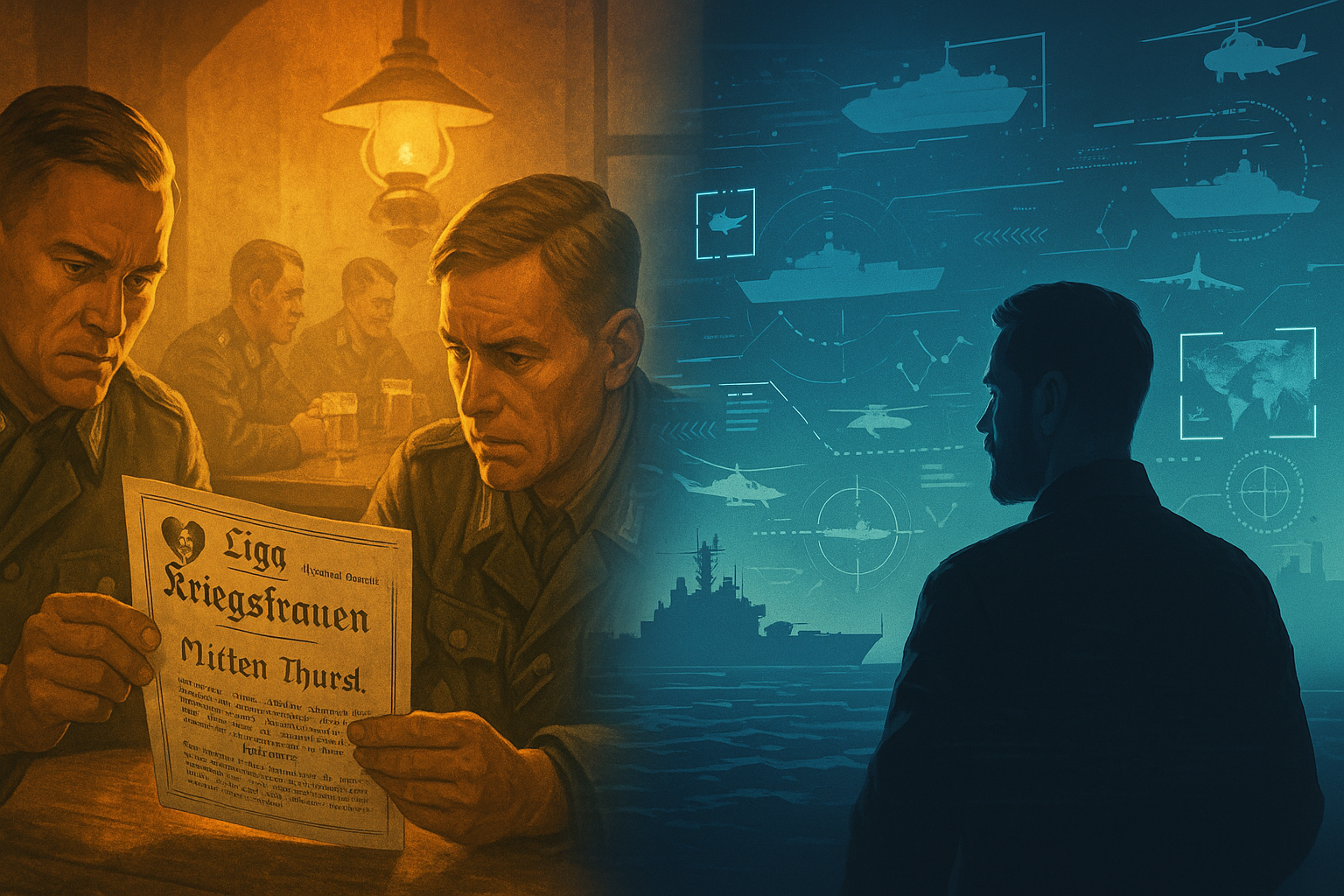

What’s Old Is New Again: synchronizing deception and information advantage as a strategic discipline.
The New War Problem
The United States faces a strategic paradox. Our rivals—China and Russia—treat the I in the DIME (diplomatic, information, military, economic instruments of national power) as the main effort, not a backdrop. Beijing’s Unrestricted Warfare makes information—psychological, media, cyber, and financial—central to statecraft. Moscow fused visible force with invisible narratives in Crimea and Ukraine, proving that information can set conditions before the first shot and shape perceptions long after. Washington, by contrast, still treats information advantage as a tactical enabler—supporting fires for diplomacy, military power, and economics—rather than a strategic discipline in its own right.
Strategist Joshua Rovner is right to warn against techno-optimism: cyber, space, and information don’t overturn the logic of strategy. But that caution shouldn’t excuse complacency. The problem isn’t that these domains are revolutionary; it’s that we’ve fallen behind in synchronizing them at the national level. Our predecessors knew how to integrate the full DIME, with information leading and amplifying the rest. What the United States needs now isn’t novelty. It’s recovery—and a deliberate elevation of the “I” to parity with the other instruments of power.
The problem isn’t that these domains are revolutionary; it’s that we’ve fallen behind in synchronizing them at the national level.
The Old War Solution: Steel and Shadows in WWII
June 6, 1944: Allied steel crashed onto Normandy’s beaches, 5,000 ships, 11,000 aircraft, 156,000 troops. But the decisive blow had been struck weeks earlier, invisibly, when German Field Marshal Rommel kept his Panzer divisions 200 miles away at Pas de Calais, paralyzed by phantom armies that existed only in Allied deception plans. Steel delivered victory. Shadows made it possible. The Allies elevated deception from tactical trickery to strategic art. Operations BODYGUARD and FORTITUDE didn’t just confuse German intelligence; they fixed entire army groups in the wrong theater.
Operation POINTBLANK bombing campaigns reinforced false narratives about the timing and location of the invasion. The Ghost Army deployed dummy tanks and fake radio traffic, creating the illusion of strength where none existed, but only because real divisions were massing elsewhere. These weren’t separate operations. They were synchronized disciplines, planned and executed as a unified strategy. But deception went deeper than dummy divisions. See the fictionalized World War II vignette below:
The rain had eased to a sprinkle, and the pub felt almost cheerful, lamps warm on brass taps, a crackle from the stove, wet coats steaming into something like comfort. He chose a table near the heat and front entrance to let the enamel pin catch the light: a split heart, tidy script, Liga Einsamer Kriegsfrauen.
Two young German corporals noticed. “Your girl joined the club?” one called, grinning. He played it easily. “It’s a charity. You see the pins everywhere in Munich, shopgirls, tram conductors.” The room loosened. At the bar, a sergeant rolled his eyes. “Charity. My cousin says they meet on Thursdays and dance on Saturdays.” He set a leaflet on the table, cheap paper, smudged type, a ladies’ calendar full of breezy notices. “From home,” he said. The sergeant took it despite himself.
Talk drifted and gathered. An infantryman said his sister was “keeping busy.” Someone mentioned the baker’s assistant’s new pin. “Keep it,” he told the sergeant, who was already palming the page. “There’s a list of…meetings. My girl swears by them.” The word landed and stayed.
Outside, he checked his watch, two streets to the rendezvous, a dead drop under the tram bench. He struck a match, cupped the flame, and lit a cigarette; the first drag steadied the hand that had passed the leaflet. The pin vanished into his pocket; the smile did, too. Inside, the chatter had turned thoughtful, names compared, dates counted, postcards parsed for hints. The room didn’t know it, but a message had been delivered and propagated.
He walked on through the damp air, smoke trailing behind him, three fresh leaflets and a cover story that still held. No radio burst, no gunshot, just rumor seeded over beer and warmth. A successful operation, hidden in plain sight, carried on a laugh, a leaflet, and a pin.
Scenes like the vignette above occurred frequently in the pub scene of German society during the war. However, this particular scene was part of an elaborate Office of Strategic Services (OSS) operation concocted by Corporal Barbara Lauwers. She learned early that a whisper could move armies. In the humid Rome summer of 1944, Corporal Lauwers, multilingual, quick-witted, and newly folded into the OSS Morale Operations Branch, sat under a blackout lamp, turning POW gossip into weapons sharper than steel.
Corporal Lauwers’ brief: make the enemy doubt, hesitate, and lay down their arms. Lauwers didn’t just edit leaflets; she invented worlds entirely, reshaping public opinion on two crucial fronts: Warfront and Homefront. One of her creations, the mythical “League of Lonely War Women,” taunted front-line Germans with the idea that sweethearts back home had moved on. Thousands of copies rolled off Rome presses; even a stateside newspaper swallowed the ruse, reporting the club as real. Every scrap of the shadow campaign was designed to feel plausibly shabby, cheap paper, smudged ink, so no one would suspect Allied presses. The point wasn’t beautiful; it was believability, a rumor launched into the ranks aimed at degrading the will to fight.
The genius of the Allied strategy wasn’t choosing between steel or shadows; it was both. Synchronized in intent, yet decentralized in execution. Visible power (naval bombardment, airborne drops, armored thrusts) amplified deception (ghost armies, forged propaganda, psychological operations). Steel made shadows credible. Shadows made steel plausible. Together, they achieved what neither could alone: Cognitive Advantage.
The New War Solution: Fortitude 2.0 with Modern Synchronization
What would FORTITUDE look like today, enhanced by AI, cyber capabilities, and real-time information operations? Consider an Indo-Pacific vignette in 2027:
The People’s Republic of China began leveraging infrastructure projects across the South Pacific, quietly converting ‘development ports’ into potential dual-use logistics hubs. For Beijing, these were steppingstones for strategic reach; for local governments, they appeared as promises of prosperity. Operators embedded across the region sensed shifts in the operational information environment, unusual shipping manifests, local complaints about land seizures, and rising social media chatter over debt concerns. AI-enabled pattern detection, a technology Barbara Lauwers never had, confirmed exploitation in real time.
Within days, an information advantage cell orchestrated a synchronized shadow campaign: Local influencers and journalists amplified grassroots grievances about PRC contracts. Human intelligence (HUMINT) teams activated graffiti crews to start shaping the neighborhood by referencing new labor unions. Cyber teams disrupted shell companies posing as local firms, a modern evolution of Operation CORNFLAKES‘ mail infiltration. Regional media outlets received discreet leaks that exposed exploitative loan terms. Civil society partners seeded narratives of sovereignty and resilience, reframing Beijing’s ‘gifts’ as Trojan horses, the same psychological warfare Lauwers practiced, now amplified through social media and digital networks.
These shadows set the stage for visible power. Allied naval task forces conducted overt exercises near contested ports, signaling credible deterrence, the modern equivalent of massing real divisions, while ghost armies deceived and influenced local port workers into labor contracting discussions. Aerial patrols mapped sea lanes in plain view. Diplomatic envoys announced transparent aid packages and alternative financing, offering host-nation leaders a viable counterweight to Beijing. Allied logistics units staged visible stockpiles of humanitarian assistance, reinforcing the narrative of partnership without coercion. The Allied response demonstrated that the old discipline, synchronized steel and shadows, remains decisive when enhanced with modern capabilities.
Together, steel and shadows achieved what neither could alone. Beijing was forced to divert naval assets and political capital to stabilize its faltering initiative, while local leaders pivoted toward allied alternatives. The technology and tradecraft were new: AI sensing, cyber disruption, and real-time social media amplification. The discipline hadn’t changed since WWII Germany– it was still synchronized deception and visible power, planned and executed as a unified strategy.
As in 1944, when German divisions were pinned down in Calais by FORTITUDE and Nazi confidence was undermined by Operations CORNFLAKES and SAUERKRAUT, this vignette describes how the adversary miscalculated. The coalition secured decision advantage without escalation. The lesson: we don’t need to invent new warfare. We need to recover old disciplines and synchronize them with modern information forces.
Call to Action: Re-Institutionalization
The United States has traded strategic dominance for tactical firefighting because we forgot what the Allies knew instinctively: the “I” in DIME—information—is a strategic discipline, not garnish. Our adversaries haven’t forgotten. China’s Unrestricted Warfare simply codifies what Operations BODYGUARD, FORTITUDE, and CORNFLAKES proved: possessing the cognitive advantage at the strategic level steers campaigns more decisively than any single tactical blow.
We need to recover old disciplines and synchronize them with modern information forces.
The path forward isn’t novelty—it’s re-institutionalization of Information as a co-equal in the DIME construct. The United States military should:
- Stand up permanent joint cells at the combatant commands for synchronized non-lethal effects (NLE) and non-kinetic actions (NKA), resourced to plan steel and shadows as one strategy—not stovepipes.
- Elevate Information to parity with Diplomacy, Military, and Economic tools in planning, resourcing, and authorities, with clear campaign-level objectives.
- Integrate modern tech with commercial marketing talent—AI, cyber, real-time information ops—to achieve the synchronization our predecessors managed with radios, printing presses, and dummy tanks.
The Allies won by synchronizing steel and shadows. The People’s Republic of China (PRC) and Russia have internalized that lesson. The question isn’t whether synchronized deception and information advantage work—history says they do. The question is whether the United States will restore the “I” in DIME before it surrenders another generation of strategic advantage.
What’s old is new again. It’s time to remember.