(When) Will Israel Attack Iran Again?
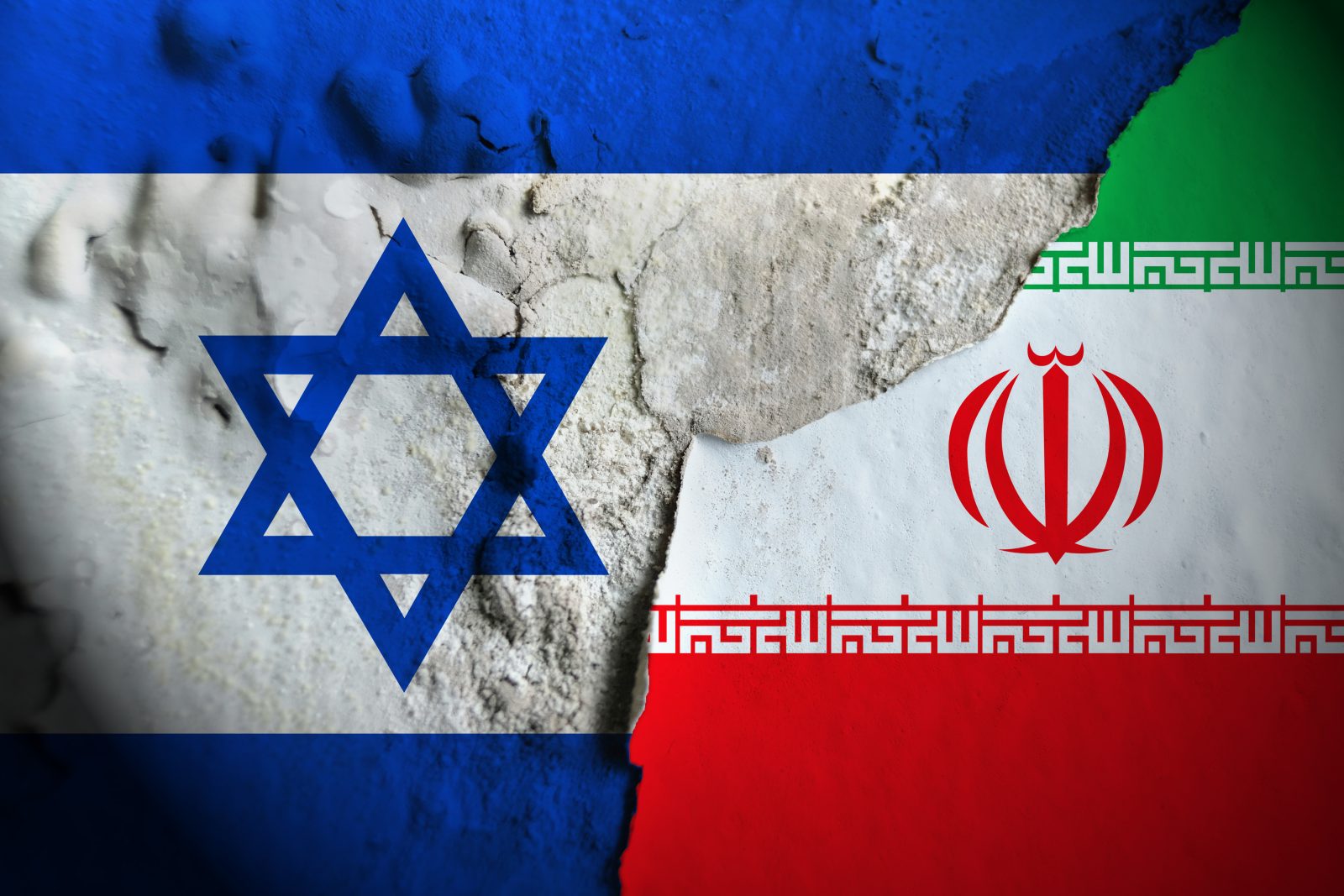

The Silence Between Wars
It is often said that peace between geopolitical competitors is not an agreement, but an intermission. Between one war and the next, capitals across the Middle East rehearse familiar scripts: missiles are replaced, alliances are recalibrated, and ghosts of deterrence float through every briefing room. Gaza bleeds quietly; Lebanon hums under the occupation that was never really lifted; and the Gulf monarchies, forever hedging, test how far wealth can insulate them from catastrophe.
The United States, for its part, still plays its strange double role — the restrainer and the accelerant. A superpower that deploys force to prevent war, but whose very presence guarantees that war will always remain an option.
The world watches the Strait of Hormuz for clues to the next shock. But if we’re honest, the question is no longer if the next Israel–Iran war will come. The question is when, and whether the next one will be the last that the region can survive.
For Israel, time is both a weapon and a wound. Every month that passes allows Iran to grow more resilient — to replace its shattered radars, to multiply its missile batteries faster than Israel or the United States can replenish interceptors.
By December, as Trita Parsi observed in August, the window narrows. U.S. political cycles matter — especially now that Trump’s re-election machinery is bound to the mood of the “America First” right, whose support for Israel has eroded sharply since the Gaza disaster and the ill-fated strike on Qatar. The irony is brutal: Israel’s overreach may have created the very political conditions that now constrain it.
Netanyahu knows this. For him, war is not only a strategy — it is personal survival. Without Gaza to bomb and without a foreign enemy to fear, he faces prison and political collapse.
And so, the calculus is renewed: if not Gaza, then Tehran.
A Doctrine of Permanent Preemption
Israel’s security establishment has long abandoned the idea that deterrence can be mutual. Where other states see threats as the sum of capability and intent, Israel assumes the latter to be constant. Every neighbor, it believes, carries the eternal intention to destroy it. Intent, therefore, is not a variable — only capability is.
This is the logic that justifies a policy of continuous preemption, striking before the other side can retaliate. It is a doctrine born from the trauma of annihilation. Still, it has metastasized into an empire of insecurity — one that demands the perpetual domination of every state within missile range.
And yet, as Iran’s missiles demonstrated in the last war, the region is no longer big enough for Israel’s comfort. Geography has collapsed into minutes. Tehran is twelve minutes away, and Tel Aviv is no longer beyond reach.
Iran’s Counter-Silence
In Tehran, preparation and theater blend into one. The regime drills for a second war, building launchers, stockpiling missiles, courting Russian aircraft, and refining coordination with Hezbollah, the Hashd, and the Houthis. How much of this is readiness, and how much of it is signaling, no one outside the Islamic Revolutionary Guard Corps (IRGC) truly knows.
But uncertainty itself is Iran’s deterrent language — the same grammar I once described as the weaponization of ambiguity. Every drone exercise, every televised missile launch, is a reminder that even a wounded Iran can still inflict catastrophic pain.
In that sense, Iran has learned Israel’s own lessons too well. Deterrence in the modern Middle East is not about preventing war; it is about choreographing uncertainty so precisely that your enemy can no longer calculate victory.
One of the unspoken truths of the June war was how deeply Mossad had penetrated Iranian territory. Missiles fired from beyond Iran’s borders, but the sabotage — the drone strikes, the assassinations, the communications disruptions — came from within. Israel’s true success was not aerial but internal: the creation of temporary micro-fronts inside its enemy’s geography.
Yet this success came at a cost. Networks, once invisible, were exposed. Whether Mossad can regenerate such reach in mere months is doubtful. But for every cell destroyed, another may be waiting in training camps just beyond Iran’s periphery — in Azerbaijan, perhaps, whose territory was reportedly used during the war.
If another conflict erupts, the risk of spillover into the South Caucasus is real. The August 8 agreement between Baku, Yerevan, and Washington opened new corridors — economic on paper, but strategic in practice. In the next round, the war may not stop at the Zagros; it may climb into the Caucasus, where every ethnic and political fissure becomes a potential front.
The Trap of Strategic Hegemony
In the end, Israel’s wars are not driven solely by domestic crises or the ambitions of one embattled prime minister. They are products of a system that defines safety through supremacy — a survival logic that can never be satiated because it cannot imagine coexistence.
But every missile that fails to intercept, every Arab capital that refuses to normalize, every American senator who hesitates, or calls a genocide a genocide — all of these are cracks in the armor of inevitability. The U.S. should retire its black-and-white grammar and make the effort to pivot toward an inclusive regional framework—the only security arrangement that can endure long-term.
The danger is that Israel, fearing decline, might accelerate toward war to postpone peace. But history shows that the more a nation depends on war for its identity, the less capable it becomes of surviving peace when it finally arrives.
So, when will Israel attack Iran again?
The answer lies in the same paradox that has haunted this region for generations: deterrence as dependence, dominance as fear. Israel and Iran now inhabit a strategic ecosystem in which deterrence no longer prevents war — it merely shapes the intervals between them. Every strike tightens the spiral; every pause shortens the next pause. Without an external shock or diplomatic architecture to interrupt the cycle, the next conflict becomes a matter of timing rather than choice.
Unless both nations learn to live with uncertainty — rather than weaponize it — the next war is not a question of time, but of endurance. How long can two nations keep testing each other’s thresholds before the entire region collapses into the void between red lines and black boxes?