Air and Missile Defense and Point Defense in Near-Peer Conflict: A Joint Doctrine and ACE Imperative


In the age of low-cost, long-range one-way-attack drones (OWA), stealthy cruise missiles, ballistic missiles, and hypersonic weapons, the role of defensive operations has changed. As military leaders look to address these challenges, the question becomes: how do we provide effective air and missile defense (AMD)? No service branch can do it alone. The only effective and actionable plan to provide AMD or Point Defense (PD) is to leverage all our Joint capabilities. We do not achieve this, as our grandfathers did in WWII, via land seizure and overwhelming force. We are now dependent on being a leaner and more flexible force that can operate and execute on a more rapid timeline.
The only current option for this is a scheme of maneuver centered around Agile Combat Employment (ACE). This offers decentralized execution and empowers leaders at the lowest level. If the Air Force is to execute AMD and PD against a near-peer adversary, it will depend on the ACE scheme of maneuver and the support of the Joint Force. To understand this strategy, we will review three topic areas: AMD Asset Costs vs Adversary Weapons; How ACE affects air/missile defense and point defense; and the Air Force as a joint force doctrine driver, not a sole user.
AMD Assets Costs vs. Adversary Weapons
“Air dominance is not a birthright, but it’s become synonymous with American airpower, but our dominance needs to be earned every single day”—General David W. Allvin, USAF
We, as Americans, have become accustomed to dominating all aspects of warfare. However, the People’s Republic of China (PRC) is directly challenging this sense of security. After decades of living by the mantra “Hide your strength, bide your time, never take the lead,” the PRC has modernized all aspects of its military, elevating it to the status of a peer adversary. Furthermore, the PRC has developed a specific counter-US strategy across the Indo-Pacific Command (INDOPACOM) known as Anti-Access/Area Denial (A2AD). As highlighted in Figure 1, the PRC has sought to create an interconnected minefield of sensors, shooters, and command elements to push back the reach of US forces from what the PRC believes to be its sphere of influence. To achieve this, the PRC has invested heavily in long-range strike capabilities, including next-generation cruise missiles, ballistic missiles, OWA drones, and hypersonic weapons.
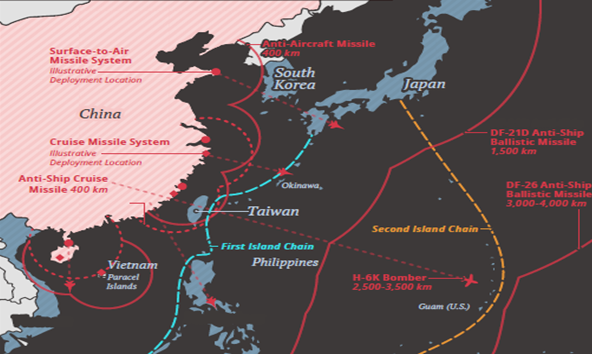
Figure 1: PRC A2AD Network in the First and Second Island Chain
Strategists lack large-scale case studies to evaluate AMD and ACE on the modern battlefield, so they must instead rely on smaller incidents to assess the strategy’s effectiveness. The last major combat operations that employed AMD are Desert Storm and Operation Allied Force. However, in both examples, the US and allied forces were able to overwhelm Iraqi and Serbian air defense assets using a combination of stealth aircraft and long-range strike weapons. Furthermore, ACE as a large force scheme of maneuver has never been employed in combat, and analysts are left to training exercises for their analysis. However, one example of how modern AMD could be employed is the Iranian attack against Israel on April 13, 2024, which consisted of “70 drones, 120 surface-to-surface ballistic missiles, and 30 cruise missiles.” US forces successfully intercepted nearly all threats using the combined capabilities of Air Force and Army weapons systems, including the F-15E Strike Eagle, the MIM-104 Patriot, and the Coyote Counter-Unmanned Aerial System (C-UAS).
Despite operational success against Iran, two issues emerged: the unit cost of traditional PD or counter-air munitions makes their long-term use prohibitively expensive, and the Air Force lacks the organic capability to perform its AMD mission alone. Tactics, engineering, and scientific advancements have rendered the traditional understanding of breaking the enemy’s kill chain archaic, as every sensor is not designed to support the theory of mosaic warfighting, or the kill web (see Figures 2 & 3).
Using the April 13 attack as the baseline, it would take an estimated 25 F-15Es and 200 air-to-air missiles, just to shoot down the OWA and cruise missiles, and would cost an estimated $996,500,000. When compared with Iran’s estimated $6.8 million cost to launch 170 OWA drones, the cost disparity speaks for itself. Additionally, the time required to supply and replace the required missiles is a factor, as roughly 500-800 rounds are produced each year for the entire Department of Defense. Iran, in contrast, can build thousands of OWA drones annually, thereby increasing the likelihood that it can simply out-number the Air Force and deplete its stockpiles.
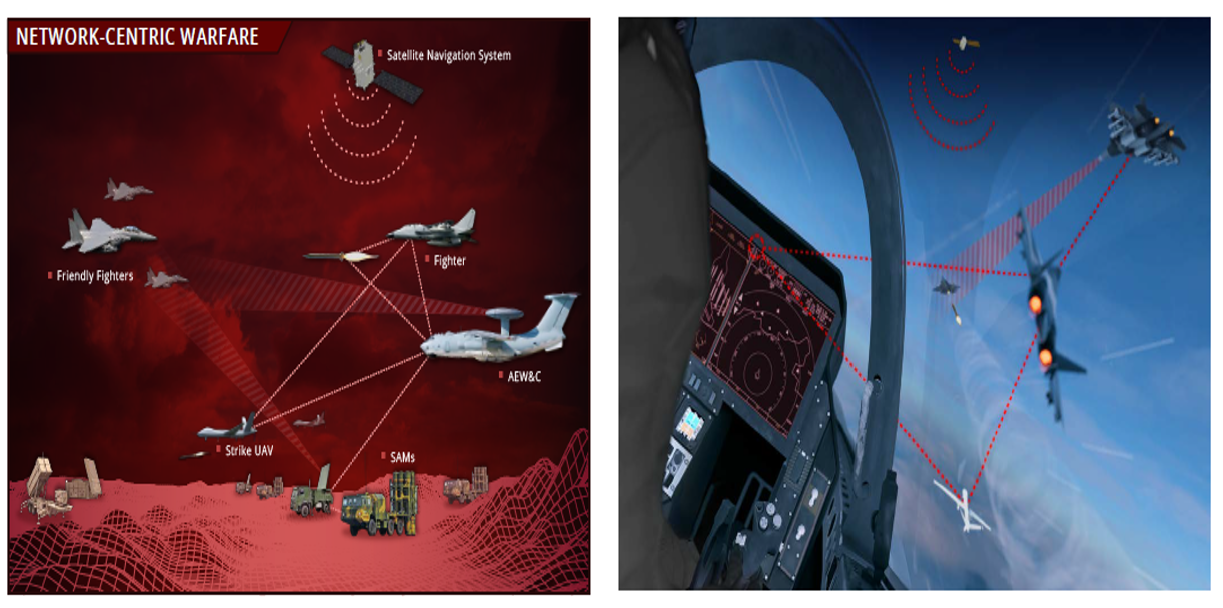
Figure 2 (left): Kill Web Example & Figure 3 (Right): Kill Web via Aerial Assets
To counter this trend, the Air Force has expanded its interoperability with its Joint partners. One example is the coordinated use of the Army and Marines’ Coyote C-UAS systems. The Coyote C-UAS “unmanned aircraft system is small, expendable, and tube-launched. It can be deployed from the ground, air, or a ship. The Coyote UAS can be flown individually or netted together in swarms, and it is adaptable for a variety of missions…” Compared with historic ground-based air defense systems, the Coyote is cheap, costing $100,000–$125,000 per unit, whereas the highly effective yet cumbersome MIM-104 Patriot costs $165,720 for its radar alone.
Another option is the Air Force’s repurposing of the AGR-20 Advanced Precision Kill Weapon System (APKWS). The AGR-20 program by BAE Systems “transforms unguided 2.75-inch (70 millimeter) rockets like the Hydra 70 Mk 66 and others into precision-guided munitions (PGMs).” Throughout this process, the Joint Force has strengthened its relationship with its sister service, moving past the historic challenges of fighting in a vacuum and actively working to seize upon these hard-fought procurement and planning wins. Clear emphasis on continuing to pursue these advancements was highlighted by General Chris Cavoli (USA), Commander of US European Command, “That unity is underpinned by our collective readiness across all domains to serve as the frontline of freedom for our nations and this Alliance. Exercise Austere Challenge 23 advances the USEUCOM staff capability in working with Allies and Partners to respond to crises in support of regional stability and security.” These will continue to be crucial as the PRC continues to expand on its inherent advantages of proximity to the fight, sheer number of assets, and the US military’s competing global demands.
How does ACE affect AMD and PD?
As defined by Air Force Doctrine Note 1-21, Agile Combat Employment is “a proactive and reactive operational scheme of maneuver executed within threat timelines to increase survivability while generating combat power.” The context of the ACE scheme of maneuver does not mean the physical movement of people or assets. Rather, scheme of maneuver means “The central expression of the commander’s concept for operations that governs the development of supporting plans or annexes of how arrayed forces will accomplish the mission.” ACE as the baseline for the scheme of maneuver hinges on the ability to operate in a decentralized manner and across dispersed locations (see Figures 4 & 5).
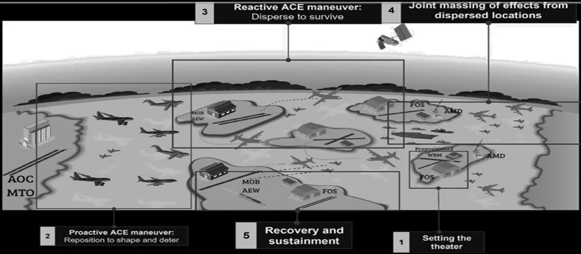
Figure 4: Concept of ACE Scheme of Maneuver
At its core, ACE is meant to complicate the adversary’s ability to sever the operational unit’s connection to its decision-makers. More importantly, in the ACE scheme of maneuver, “distributed control drives additional planning and coordination requirements at echelons below the operational level…Dispersal operations are augmented with other passive defense measures, such as hardening and camouflage.”
When comparing the AMD mission to the INDOPACOM threat, the challenges are daunting. The PRC has also adopted the A2AD strategy, which seeks to “inhibit military movement into a theatre of operations, and area denial operations…that seek to deny freedom of action within areas under the enemy’s control.” This strategy is purposely built to inhibit the capabilities of all US military forces in INDOPACOM. This, in turn, means the joint force must remain outside the PRC kill chain long enough for military leaders to respond. To counter US efforts to break the PLARF kill chain, “China continues to have the most active and diverse ballistic missile development program in the world. It is developing and testing offensive missiles, forming additional missile units, qualitatively upgrading missile systems, and developing methods to counter ballistic missile defenses.” The rate of tests remains high, with DOD’s 2020 report on the PLA noting that “In 2019, the PRC launched more ballistic missiles for testing and training than the rest of the world combined.”

Figure 5: Concept of ACE Scheme of Maneuver to Break The Kill Chain
The static defense of large, well-established bases is not an effective course of action. Instead, the US Air Force and broader Joint force need to use the ACE scheme of maneuver to afford an effective air and missile defense strategy. The ACE scheme of maneuver allows AMD assets to defend the hubs and spokes while enabling decentralized planning and execution, preventing the adversary from isolating and destroying key centers of gravity. Finally, due to ACE’s high operational tempo and decentralized command authority, the PLAAF and PLARF targeting cycle will be delayed, allowing US forces to reconstitute. The fluid and mobile case of the ACE scheme of maneuver does not change the PD doctrine, but rather augments it by “[protecting] limited areas, normally in defense of vital elements of forces or installations. (USAF, PD of Air Bases)” Though modified from the original intent of protecting static basing, ACE combined with AMD provides multiple options for both defensive and offensive capabilities in the event of a near-peer fight.
Air Force as a Joint Force Doctrine Driver—Not a Sole User
“Positions which require an intimate knowledge of the combined arms, and a breadth of vision impossible to the man who devotes his entire interest to a single arm.”—Gen. George C. Marshall
To truly achieve an effective Joint AMD, our forces need to “integrate capabilities and overlapping operations to defend the homeland and US national interests, protect the joint force, and enable freedom of action by negating an enemy’s ability to create adverse effects from their air and missile capabilities.” The PRC has not remained stationary, as it continues to train and prepare not only its military forces but also has expressed an anti-Western and anti-American agenda throughout its political network, operationalizing its entire nation for a conflict with the West. Translation of a recent Chinese communique captures the resolve of the PRC’s civil-military approach to national defense: “the position of Western anti-China forces pressuring us to change will not change, and they will point the spearhead of Westernization, separation, and “color revolutions” at us always. In response, we can absolutely not relax vigilance, and certainly not lower our guard.” If there is a conflict in INDOPACOM, the immediate concern for strategic planning is the defense of forward bases and the preservation of freedom of movement. According to a recent Rand Corporation wargame:
Following the failed attempts by both sides to fully dislodge each other, both would turn to reusable stages from modern space launchers to create high-payload intercontinental ballistic missiles (ICBMs). These ICBMs could launch either a variable number of small, terminally guided submunitions or a single very large one. Another research effort on both sides sought to develop simpler, cheaper, longer-range cruise missiles by exploiting technologies such as pulse detonation engines.
To address this emerging threat, leaders are relaying a new message across the joint force that highlights the need to be both flexible and dynamically lethal. To prepare for a 2027 conflict with China in the Pacific, the Navy is emphasizing a new class of unmanned systems in line with the Pentagon’s Replicator initiative to create low-cost, lethal air and surface systems that would disrupt a Taiwan Strait crossing. This effort by leaders to drive home the importance of this doctrine highlights the necessity. The Air Force has conducted numerous exercises for both AMD/PD and ACE to assess its interoperability with its Joint partners (see figure 6).
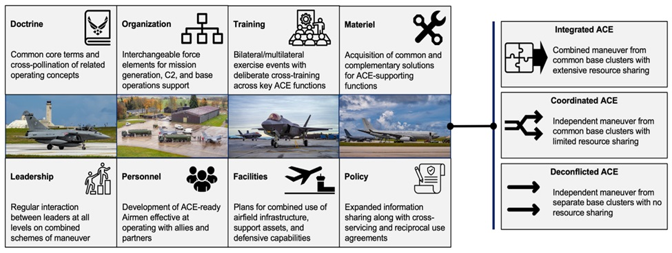
Figure 6: The Path from Theory to Employable Doctrine in The Field
Efforts such as these have led to the military’s positive movement toward flexible, mobile concepts. Clear evidence of this can be found in the Air University’s material discussing the success and purpose of Bilateral and multilateral exercises, stating:
Combined training events should focus on common scenarios with mutually supporting objectives that address defensive and offensive power projection requirements. Working through how combined forces with potentially varying degrees of integration execute proactive or reactive ACE together within the context of all-domain operations will illuminate materiel and non-materiel gaps to address.
Using bilateral and multilateral exercises allows the Air Force to not only refine joint AMD and ACE concepts but also to transform those experimental tactics into a shared, repeatable doctrine for the entire joint force. It serves as both the primary driver and means for integrating with the joint force, rather than being a sole user of capabilities in its own domain.
Conclusion
For Air and Missile Defense and Point Defense to be successful strategies in a near-peer fight, they will need the support of the entire joint force, a clear and employable doctrine, and the successful execution of the ACE scheme of maneuver. The US has made significant strides in making this an operational reality for the modern battlefield. The Air Force is expanding joint interoperability and employing joint weapons systems, which lowers operational costs without increasing the level of risk to forces. But we must continue to adapt as we prepare for the future fight.
Despite emerging threats around the world, China remains a pacing threat, and by its own admission, holds most of the cards in the geostrategic competition for primacy in the Indo-Pacific. Time and momentum in China’s near seas and airspace will always be on their side. Therefore, it is imperative that strategic joint planners continue to build on long-standing American strengths in combined technological and operational innovation and mission command. Adopting the approach could provide a means to consistently out-innovate and out-offset our competitors. Ultimately, “the side that finds the better ‘fit’ between technology and operational concepts likely will come out on top.”
It will not be an easy task by any means, as most of our military hardware and industrial capacity have become stagnant after over two decades of counterterrorism and dominating in all aspects economically and militarily. New challengers have caught up and, in certain arenas, surpassed our capabilities, creating uncertainty rather than assumed advantages. Regardless of the vast distances and daunting challenges posed by the PRC, we, as a joint force, must be ready to meet them head-on with adaptive, integrated strategies that ensure success.