





How We Care for The Wounded, Honor The Fallen, and Continue the Mission
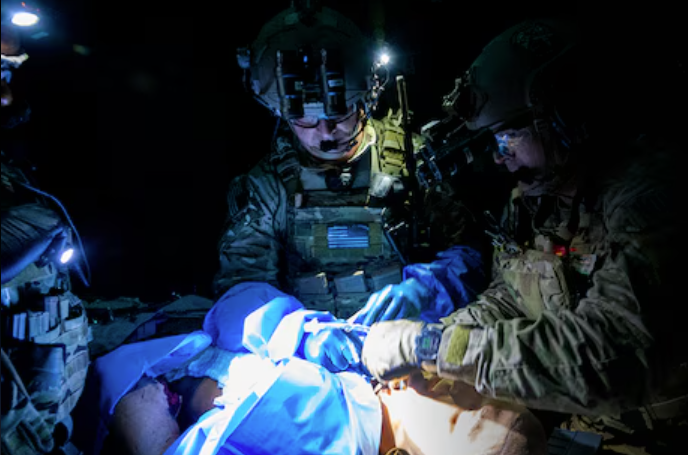

Check out this article from the Special Warfare Journal, “Austere Resuscitative and Surgical Care Teams: Supporting Far-Forward Trauma Care on the Future Battlefield.”
The authors make a compelling case for Austere Resuscitative and Surgical Care (ARSC) teams—small, mobile surgical elements that bridge gaps in roles of care—that will be indispensable in future large-scale combat operations, especially when evacuation is delayed, and mass-casualty pressures collide with contested logistics.
Manning, training pipelines, and sustainment models still lag behind the operational demand curve, and these capabilities cannot be generated “just in time” without paying a steep price in blood and readiness. That warning aligns with the Joint Trauma System’s Clinical Practice Guideline, “Austere Resuscitative and Surgical Care (ARSC),” which emphasizes ARSC-specific, team-centric readiness training and explicitly discourages abbreviated trauma preparation. It also echoes the historical lesson captured in Bernard Rostker’s “Providing for the Casualties of War: The American Experience Through World War II,” reminding us how quickly hard-won wartime medical capacity can be squandered by peacetime drawdowns.

