The Missing War: Why the 2025 NSS Needs a Political Warfare Strategy to Defeat the CRInK in the Gray Zone

The Old Gold Standard
In 1982 Ronald Reagan signed National Security Decision Directive 32. It was eight pages long. It named the enemy. It defined the threat. It laid out the global and regional objectives. It integrated diplomatic, informational, economic, and military power. It told the commanders and the agencies how to act, what to prioritize, and where to accept risk. It directed a political warfare strategy that ran from Central America to Europe to Asia. And it put America on the final glide path to winning the Cold War.
It was the gold standard because it was a real strategy. It was executable. It was focused. It had an enemy. It had a theory of victory.
A Different World That Looks Familiar
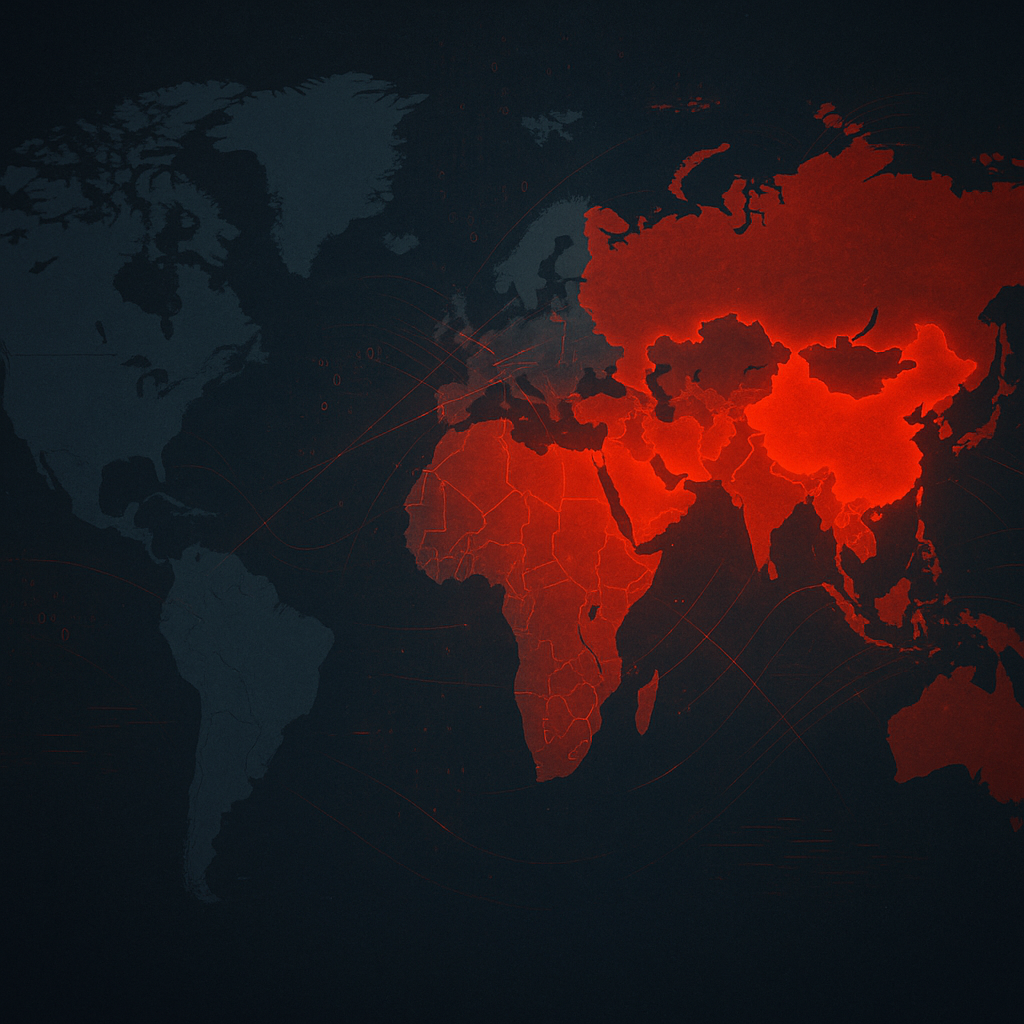
The world today is not as different as we pretend. Once again, the United States faces a coalition of hostile authoritarian powers with shared aims. China. Russia. Iran. north Korea. The Dark Quad. The CRInK. Together they seek to fracture the free world and tilt history back toward iron rule. They want to drive wedges into alliances, tear at the seams of democratic societies, and shape global institutions to be safe for authoritarian power. They work in the shadows because they know that conventional or nuclear war with the United States brings unacceptable cost. So they fight us in the gray zone. They use political warfare, cyber operations, information manipulation, dark networks, proxy forces, and economic coercion. And they do it with growing coordination.
This is not the Cold War. But it is a war. And the CRInK acts with the same discipline and patience that Soviet planners once prized. China takes the long view and uses unrestricted warfare and its three warfares to set conditions for the recovery of Taiwan. Russia uses new generation warfare to expand influence. Iran wages a patient unconventional campaign across the Middle East. north Korea conducts political warfare to undermine the ROK/US alliance.
The terrain is global. The threat is converging. The methods are political. And the fight is already under way.
The 2025 NSS: Clear on Some Dangers, Blind to Others
The 2025 National Security Strategy lays out an ambitious vision. It puts America First. It calls for peace through strength. It demands border security, economic resilience, energy dominance, industrial revival, and a renewed culture of competence. It defines clear regional interests. It wants a stable Western Hemisphere and a free and open Asia. It demands more from wealthy allies. It seeks to restore the advantages that made America powerful and prosperous. These are serious objectives. They matter.
But the strategy omits the central danger of our time. It does not name the CRInK as a unified adversarial front. It does not describe the political warfare campaigns they are waging against the United States and our allies. It does not explain how they weaponize immigration, narcotics, criminal networks, and cultural divisions to weaken American confidence and cohesion. It notes propaganda, influence operations, and cultural subversion in passing. But it does not build a plan to fight back.
The NSS tries to secure the homeland from physical flows and economic shocks. But it leaves the country exposed to political warfare. And in this era, political warfare is the main effort of the adversary coalition.
Peace Through Strength Cuts Two Ways
Peace through strength is necessary. It deters conventional and nuclear war. It keeps major-power conflict in the shadows. But that same strength pushes the CRInK to fight us where our strength does not reach. In the human domain. In information space. In cyber networks. In economic dependencies. In the minds of citizens across the free world.
Our military power pushes the adversary into the gray zone. That is where they operate with freedom and where we are least organized to resist.
Reagan understood this. NSDD 32 was not only about tanks and missiles. It was about political warfare. It directed influence operations, economic pressure, disruption of proxy networks, information campaigns, and support to resistance movements. It aimed to raise the cost of Soviet expansion. It sought to erode Soviet legitimacy. It played offense in the gray zone.
The 2025 NSS does not do this. It plays defense at home and seeks coexistence abroad. That may buy time. But it will not win.
The Missing Strategy: A Campaign in the Gray Zone
What is needed is a political warfare strategy built on the NSDD 32 model. The United States must define the CRInK as the adversarial coalition it has become. And we must design an integrated political warfare campaign to defeat it.
A modern directive would need to do five things:
- It must name the adversary coalition and describe its political aims.
- It must direct integrated campaigns across the instruments of national power.
- It must elevate irregular warfare as the military contribution to political warfare.
- It must establish interagency structures that can act with unity and speed.
- It must guide allies in Asia-Indo-Pacific and Europe in shared campaigns.
This is the logic behind the DISRUPT Act. Congress sees the danger. It sees adversary alignment. It sees that the United States needs an institution for political warfare. A Political Warfare Service 2.0. A modern successor to the OSS that can operate around the world in the gray zone and support allied resistance against authoritarian pressure.
The 2025 NSS should have acknowledged this. It did not.
The Way Ahead
The fight with the CRInK will not begin with a missile strike. It is happening now. It is slow pressure. It is targeted influence. It is debt leverage. It is cyber intrusion. It is disinformation. It is proxy operations. And it is done with hostile intent.
If the United States wants peace on its terms, we must compete where the enemy competes. Not only along sea lanes or trade routes. But in the human domain. In societies. In institutions. In information systems. In partner nations under pressure. We must create dilemmas for adversaries. We must help allies resist subversion. We must take the offensive in the gray zone.
A National Security Strategy without political warfare is like a rifle with no firing pin. It looks strong. But it will not fire.
Reagan’s NSDD 32 showed the way. The 2025 NSS needs a companion directive that brings its strengths to life and fills the political warfare gap. If we do not build that strategy, the CRInK will keep shaping the world beneath the threshold of war while we remain blind to the battle.
And the next crisis will not be one we choose.
Check out everything Small Wars Journal has to offer!