





Navigating The All-Domain Battlespace: Introducing All-Terrain Planning


Abstract
Joint All-Domain Operations necessitate a shift towards “all-terrain planning,” a framework that conceptualizes each operational domain as a distinct terrain feature with unique characteristics. This approach moves beyond simply operating in each domain, instead focusing on when and how to strategically allocate resources based on operational objectives. Crucially, all-terrain planning teams must determine when to cede, contest, or dominate a domain to optimize resource employment and achieve synergistic effects across the air, land, sea, space, cyber, and electromagnetic spectrum domains. Implementing this approach is essential for achieving decisive advantage in complex twenty-first-century conflicts.
Introduction
Contemporary warfare has evolved far beyond the linear, attrition-based models of the past due to rapid technological advancements. Warfare is now multi-dimensional, extending beyond land, sea, and air to encompass space, cyber, and the electromagnetic spectrum. Complicating matters further, peer adversaries possess sophisticated capabilities and tactics across all domains, that challenge the United States’ strategic objectives and exploit perceived vulnerabilities. To effectively counter threats and maintain a competitive edge, the United States (US) Military has embraced Joint All-Domain Operations (JADO), a transformative warfighting concept that integrates capabilities across all domains and joint functions. JADO signifies a departure from traditional domain-centric approaches, where individual services operated largely independently within their designated spheres. Instead, JADO envisions a seamless, interconnected, and interoperable force. A force that can rapidly share information, coordinate actions, and deliver decisive effects across the air, land, sea, space, cyber and electromagnetic spectrum domains.
To achieve success in the next conflict, the US Military does not need to dominate everywhere across the complex battlespace; rather, it requires a disciplined, integrated planning approach developed around JADO planning considerations. This article introduces “all-terrain planning,’ a framework that shifts from simply operating within each domain to strategically allocating resources based on operational objectives—deciding where to deliberately cede, contest, or dominate control of key domains as the situation dictates. An “all-terrain planning” framework treats each domain as a distinct terrain feature, characterized and valued by unique operational advantages, limitations, and vulnerabilities, demanding a nuanced understanding of when to cede, contest, or dominate based on resource constraints and operational objectives. Such domain prioritization, guided by a comprehensive assessment of adversary vulnerabilities and focused on achieving convergent effects at critical junctures, is paramount to optimizing resource employment, achieving synergistic effects, and attaining a decisive advantage in the complex twenty-first-century battlespace.
Central to this framework is the “all-terrain planning team,” a critical team composition capable of integrating domain expertise and applying established military principles while planning joint all-domain operations. By investing in planner development and embracing all-terrain planning, the US Military can achieve true convergence, unlocking the full potential of JADO and ensuring decisive advantage in future conflicts through smarter, not just greater, resource allocation.
Terrain Analysis & Battlespace Management in JADO
In future conflicts involving the US, military operations will likely be conducted in concert with allies and partners across expansive geographic theaters. These theaters will likely be organized into multiple joint operations areas (JOAs), each under the command of a designated joint force commander (JFC). Given the JFC’s responsibility for orchestrating JADO within their respective JOA, resource constraints are anticipated.
The successful implementation of JADO as a decisive warfighting concept requires a dynamic and adaptive operational approach, prioritizing actions in each domain to exploit advantages and manage risk across an operational environment, especially during large-scale combat operations (LSCO). The inherent complexity of LSCO, characterized by vast operational areas, dispersed forces, and resource constraints, only amplifies the need for JADO’s adaptable, multi-faceted approach. Success in LSCO demands operational agility that allows the military to dynamically allocate resources, exploit opportunities, and achieve convergence at critical points.
However, the mere integration of capabilities and technological advancements does not guarantee success in JADO. A truly effective all-domain approach necessitates a fundamental shift in mindset. It requires moving beyond the traditional stove-piped planning processes to embrace an “all-terrain planning” framework. This framework requires military planners to view each operational domain as a distinct terrain feature, characterized by unique attributes, challenges, and opportunities. Just as terrain analysis informs maneuver and fire support decisions on the physical battlefield, a comprehensive understanding of each domain’s characteristics is crucial for effective resource allocation and operational effectiveness in JADO.
US Army Field Manual 3-0, Operations, underscores the importance of terrain analysis as a foundational element of successful military operations. Traditionally, terrain analysis focused on the physical features of the land, such as elevation, vegetation, and obstacles, and their impact on maneuver, firepower, and logistics. However, the concept of terrain must now expand to encompass the non-physical domains that are integral to modern warfare. As outlined in US Joint Publication 3-0, Joint Campaigns and Operations, operations in one domain will invariably have consequences in others. Merriam-Webster defines terrain as “a geographic area,” “a piece of land,” or “the physical features of a tract of land.” Applying this definition broadly, we can conceptualize each domain—air, land, sea, space, cyber, and the electromagnetic spectrum—as a distinct area presenting unique characteristics and challenges. All-terrain planning requires a broad perspective that applies established joint functions, like movement & maneuver, fires, and protection, to facilitate a more holistic and resource-informed understanding of the operational landscape to enable more effective planning.
Deciding when to Cede, Contest, and Dominate Domains
Effective JADO hinges on an operational approach that prioritizes domains and allocated resources based on their relative importance across the operational environment. Acknowledging the fluctuating importance of different domains across varying times and locations, a disciplined and adaptable framework enables strategic resource allocation by deliberately shifting focus between ceding, contesting, and dominating key domains based on the specific operational environment. Informed by a comprehensive analysis of domain characteristics, strategic priorities, resource constraints, and adversary capabilities, this strategy streamlines risk management and fosters convergence at decisive points, thereby enhancing the effectiveness of all-domain planning – a complex challenge, especially amplified within the scale and scope of LSCO.
The cornerstone of successful JADO lies in the ability to effectively plan the allocation of resources by knowing when to cede, contest, and dominate domains across the duration and space of an operation.
The decision to cede control in a specific domain is often the most difficult, yet strategically vital choice. Ceding is not an admission of defeat but rather a calculated choice to conserve resources, consolidate capabilities, and create opportunities for future offensive actions. It implies accepting a degree of risk in a particular area, deliberately foregoing attempts to control or influence it, and requires careful consideration of potential consequences. Resource limitations and the need to prioritize efforts in other geographic areas, where a greater impact can be achieved in this domain, often drive this decision. In a hypothetical scenario, a joint force facing a numerically superior adversary in the land domain might strategically cede less defensible terrain to consolidate forces along a more advantageous defensive line. For example, during a conflict in the South China Sea, the US Navy might temporarily cede control of certain islands to focus on maintaining sea control in the broader region and ensuring freedom of navigation for other maritime assets.
The advantage of ceding lies in the conservation of resources, the ability to concentrate efforts where they have the greatest impact, and the potential for deceiving the adversary. However, given our inherent national vulnerabilities in the cyber and space domains, completely ceding control of these domains is untenable due to major dependencies. Instead, planners should analyze and prioritize the protection requirements of identified key terrain in these domains to allow more acceptable ceding options that prevent adversaries from gaining a marked advantage. In many cases, a commander’s risk tolerance may preclude any willingness to cede terrain during military operations. To mitigate potential consequences and adversary exploitation when ceding terrain, planners must develop contingency plans. These plans should instill sufficient confidence in the commander that ceding terrain, when necessary, remains a viable and acceptable decision.
Conversely, contesting a domain involves actively challenging an adversary’s control or influence without necessarily seeking dominance. This approach is crucial when resources are insufficient for a full-scale offensive, or when the primary objective is to disrupt, degrade, or deny an adversary’s capabilities. Contesting aims to create a more favorable environment for future offensive actions or to prevent the adversary from achieving its objectives. It involves maintaining a credible threat, exploiting adversary weaknesses, and applying targeted measures to disrupt their operations, erode their morale, and force them to expend resources on defensive measures.
Examples of contesting include deploying offensive cyber capabilities to disrupt critical infrastructure, launching electronic warfare operations to jam adversary communications, and conducting targeted strikes to degrade enemy air defenses. For instance, the US military used electronic warfare against Iraqi air defenses during Operation Desert Storm, demonstrating a strategy designed to contest the enemy’s control of the air. Similarly, Iran employs asymmetric naval tactics, including small boats and anti-ship missiles, in the Persian Gulf, as a strategy designed to contest US naval dominance in the region. Attritable and non-attritable gray-zone activities, such as China’s actions with its maritime militia, law enforcement patrols, and illegal fishing activities, demonstrate great examples of how China is contesting certain domains below the threshold of armed conflict to undermine rivals and exploit vulnerabilities.
Dominating a domain, on the other hand, implies achieving a level of control that allows the joint force to operate freely and unhindered during specific periods. This requires a significant investment in resources and capabilities and is typically prioritized in domains deemed most critical to achieving operational effects and objectives. Dominating a domain often entails establishing air superiority, achieving sea control, or securing a key landmark to establish a marked advantage over an adversary. The advantage of dominating is the creation of a secure operating environment for friendly forces, the ability to project power and influence, and the potential to achieve a marked advantage over an adversary.
The cornerstone of successful JADO lies in the ability to effectively plan the allocation of resources by knowing when to cede, contest, and dominate domains across the duration and space of an operation. This requires a highly skilled “all-terrain planning team,” capable of understanding the nuances of each domain and integrating them into a well-coordinated and synchronized plan. All-terrain planning teams must possess a deep understanding of each domain’s characteristics, including its key terrain, vulnerabilities, and potential impact on overall mission success. They must also be adept at analyzing adversary courses of action based on their capabilities and intentions, assessing the risks associated with each friendly and adversary course of action, and identifying opportunities for achieving convergence at critical points in the battlespace.
Achieving Convergence: The Decisive Application of Combat Power
When deciding to dominate domains, the goal should be centered around achieving convergence – the simultaneous application of combat power across multiple domains at a decisive time and place. This requires the synchronization of effects across multiple domains to overwhelm the adversary and achieve decisive friendly results. Convergence requires a sophisticated command and control (C2) system capable of coordinating actions across different domains, each with its own unique characteristics and timelines. To mitigate all-domain coordination challenges, the US Military’s Joint All-Domain Command and Control (JADC2) concept is designed to address the C2 challenges inherent in convergence by improving information sharing, decision-making, and coordination across all domains. By creating an advanced joint common operation picture, JADC2 aims to enable commanders to make informed decisions and synchronize actions across the all-domain environment.
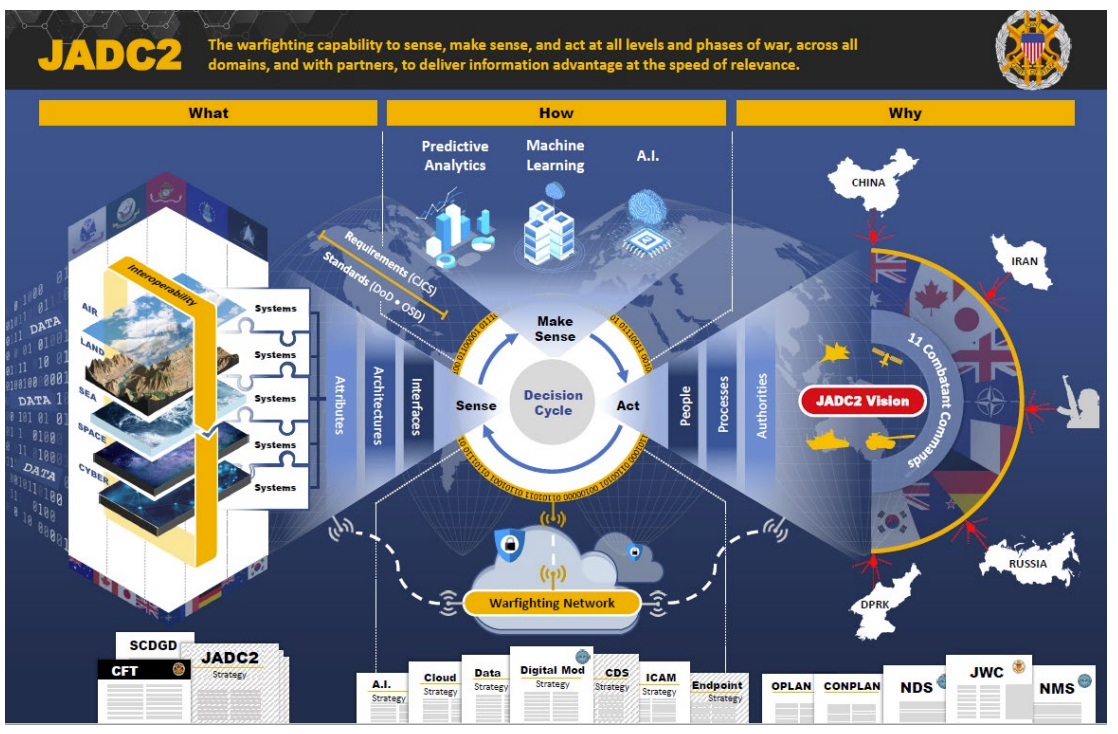
However, achieving convergence is not simply about coordinating actions; it is about orchestrating the achievement of effects to maximize the impact of each domain’s contribution. The all-terrain planning framework provides a structured approach for identifying the critical domains, resources, and synchronization requirements needed to achieve convergence. Effective synchronization is paramount and goes beyond simple coordination. It requires a precise timing of actions across distinct domains to maximize their cumulative effect. Joint Publication 3-0 emphasizes synchronization as a key principle of joint operations by ensuring actions of all elements are coordinated in time, space, and purpose. Planners must not only understand the capabilities of each domain but also how they can integrate and synchronize them to achieve a unified effect. This requires a deep understanding of the timelines and dependencies of each domain, as well as the potential for unintended consequences. Such considerations should be emphasized when assembling an all-terrain planning team.
By focusing on domains where achieving dominance or contesting the adversary’s actions will have the greatest impact, the joint force can maximize its limited resources to achieve objectives. In a hypothetical scenario, a joint force might seek to achieve air superiority by launching a coordinated cyberattack against the adversary’s air defense systems, simultaneously deploying electronic warfare capabilities to jam their radar networks, and launching a strike by stealth aircraft to destroy key air defense nodes. This convergent application of combat power across the cyber, electromagnetic spectrum, and air domains creates a synergistic effect, overwhelming the adversary’s defenses and enabling the joint force to achieve a decisive marked advantage.
Cultivating the All-Terrain Planning Team
JADO’s success relies on the effectiveness of its all-terrain planning team. This team, comprised of individuals with diverse expertise from across the joint force, must function as a cohesive and cross-functional team. They must share information, collaborate on solutions, and develop integrated operational plans. The team must include knowledgeable representatives from all relevant domains, as well as experts across all joint functions. Creating an effective all-terrain planning team requires several key steps, such as:
Selection of Qualified Personnel—the individuals selected for the team must possess a deep understanding of their respective domains and a broad appreciation for the complexities of all-domain operations. They should also possess strong analytical, problem-solving, and communication skills.
Cross-Domain Training and Education—to foster a shared understanding of the all-domain environment, team members must receive cross-domain training and education. This could include familiarization courses on the characteristics of each domain, as well as joint exercises, simulations, and wargaming that require them to collaborate on all-domain planning problems.
Establishment of Clear Roles and Responsibilities—each team member must have a clear understanding of their role and responsibilities within the planning process. This includes defining who is responsible for analyzing the characteristics of each domain, assessing the adversary’s capabilities, developing courses of action, and integrating all-domain considerations into the operational plan.
Fostering a Culture of Collaboration and Innovation—the team must operate in an environment and establish a culture that fosters open communication, collaboration, and innovation. This requires creating a safe atmosphere where team members feel comfortable sharing their ideas, challenging assumptions, and experimenting with new approaches.
Conclusion: Towards a Future of All-Terrain Planning
The evolving landscape of modern warfare, characterized by expansive theaters, resource constraints, and peer adversaries with multi-domain capabilities, demands a transformative shift in the US Military’s approach. JADO represents this evolution, integrating capabilities across air, land, sea, space, cyber, and the electromagnetic spectrum to deliver decisive results. Successful implementation of JADO requires more than technology; it requires a new mindset focused on agility, adaptability, and achieving convergence – the synchronized application of combat power across multiple domains at a critical point.
Central to JADO is the all-terrain planning framework, which treats each domain as a distinct terrain feature with unique attributes, challenges, and opportunities. This framework guides decisions regarding when to cede, contest, or dominate specific domains, informed by a comprehensive analysis of domain characteristics, strategic priorities, resource constraints, and adversary capabilities. These deliberate choices streamline risk management and enable effective resource allocation, maximizing impact on overall mission success.
The effectiveness of JADO hinges on a highly skilled all-terrain planning team, composed of experts from across a joint headquarters. Through rigorous selection, cross-domain training, and a collaborative environment, this team analyzes domain characteristics, assesses adversary capabilities, develops comprehensive courses of action, and integrates all-domain considerations into the operational plan. By adopting this framework, cultivating all-terrain planning teams, and prioritizing convergence at critical junctures, the joint force can enhance resource prioritization, risk management, and achieve decisive results in future conflicts.


