





Aid Policy in East Africa Needs an Endgame
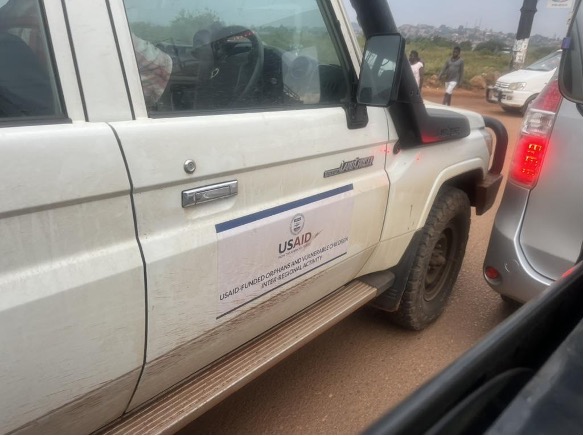

“Run.” The Ugandan worker took off in an awkward waddle and a cloud of dust. Before me stood a ragtag group of South Sudanese soldiers on the side of the road wearing gym shorts, pistol belts, flip flops, and a few surprisingly new uniforms. I quickly spun and retook my place as the only foreigner – or “muzungu” – on a bus from Kampala, Uganda, to Juba, South Sudan.
This summer, I travelled through three large-scale refugee camps, two intrastate conflict zones, and six frontier border crossings. I interviewed 12 refugees and consulted with dozens of locals concerning nearby conflicts and foreign aid policies. Interview participants completed a consent form, and the data were anonymized. A breakdown of participants is included in the appendix.
The refugees I interviewed exemplified resilience despite horrific life stories. The little stability and nourishment they knew came from foreign aid programs. But the foreign aid programs I encountered didn’t address the root causes of the refugee crisis: security issues driving displacement, and reintegration. Even in host nation camps, refugees are subject to violence and unable to secure jobs. With no clear endgame, foreign aid creates increasing dependency.
Perpetual Refugee Growth
East Africa’s political complexity and economic straits fuel violence that drives displacement. The number of differentiated armed groups and the resulting violence is difficult to fathom. Peace deals mean little, and militias fracture constantly. Child soldiering and mass rape are used by militias and national armies. Conflict has doubled Africa’s refugee population since 2018. Every refugee I met was displaced by violence.
The refugees interviewed said the pattern of conflict is motivated by revenge cycles and stable incomes. A refugee in Kyangwali told me, “Militias are the best jobs.” Other interviews supported this claim, stating that militias receiving foreign funds offer even better compensation. In contrast, South Sudanese guides mentioned that national soldiers feed their families by collecting meager bribes, despite serving since childhood. A refugee from the DRC said that similar conditions led to soldiers handing out weapons to encourage racketeering.
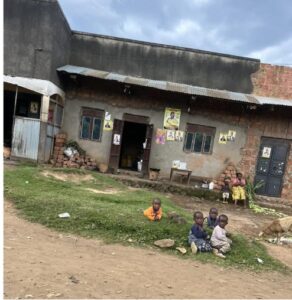
Malnourished kids in a village near Mgahinga. Source: Author
In much of the countryside, armed militias blend into tribal hierarchies. Family obligations to defend honor and land spiral into generational conflicts. Two refugees I met in Kakuma had fled violence from their extended family. One girl left Uvira, DRC, at 5 years old because her mother was from the wrong tribe. Her father’s family claimed he had created “evil blood” and tried to murder his children. Another man from Cibitoke, Burundi, had fled when his father was murdered by his uncles to steal the father’s land. Being male, this refugee was perceived as a threat to the land and forced to flee. His sisters stayed to marry into another family’s land.
Refugees understand the importance of conflict drivers. Some interview participants even suggested that funding should be allocated to security programs instead of their own camps. But peacekeeping interventions often fail, and ending wars may not reduce displacement from tribal and familial violence. Without solutions for peace and stability, the migrant crisis will worsen, and aid policies will remain unsustainable.
In addition to displacement, refugee populations grow from high fertility rates. In border towns and refugee camps, sons are seen as crucial to farming and controlling land, while daughters are married for valuable dowries. Many refugees I met had half a dozen kids while subsisting on food distributions. High fertility contributes to malnutrition and Kwashiorkor disease. High rates of displacement and fertility perpetuate the refugee crisis faster than aid can solve it.
Integration Failure
Once displaced, East Africa’s aid programs fail to address refugee integration. Kenya limits refugees’ ability to leave camps and compete for jobs with locals. Kakuma’s refugees are left dependent on UN food distributions and NGO services. Kenya’s Shirika plan promises refugee integration but faces implementation issues. In Kyangwali, refugees farm, raise cattle, and trade with each other. They leave camp to find work, but often return due to discrimination. Stuck in an impoverished area, leaders devote resources to securing international funding for basic services.
Refugees need jobs to survive and create a sense of purpose. As psychologist Viktor Frankl argues, meaning is essential for mental health and resilience. Lacking jobs, refugees rely on aid and are deprived of meaning. But integration takes decades and is limited by host country politics and the fragility of local economies. Without independence, refugees remain victims of circumstance and are subject to unstable aid policies.
An Artificial Industry
For host countries, foreign aid funds an artificial industry. In Kenya in 2022, over 71,000 people were employed by NGOs. At this scale, aid becomes a fragile pillar of the local economy. A USAID contractor I met in Juba hadn’t heard from her new State Department supervisors in weeks but planned to work until funds ran out. A Kenyan NGO staffer expected to lose her job due to donor cuts. Locals told me that high NGO wages inflate prices around refugee camps, making it harder for refugees to survive independently.
In Kakuma, budget cuts and inequality fuel systemic violence. A differentiated food distribution system was built to favor vulnerable refugees. But interviews indicate that relatively wealthy refugees receive more, while single parents and the disabled get less. Refugee leaders reported multiple suicides and weekly attacks over resources, especially targeting those few refugees with jobs. I was shown multiple images of stab wounds and witnessed one refugee going to work with a gash on his head. With aid shrinking and jobs disappearing, every refugee I spoke to predicted worsening resource violence, in line with claims by the UN Relief Chief.
Refugee Independence
Despite their plight, many refugees strive for independence by starting small businesses and community-based organizations (CBOs). They elect leaders to represent them to host countries, the UN, and international NGOs. Many take what local jobs they can find and dream of working in Western countries to send remittances home.
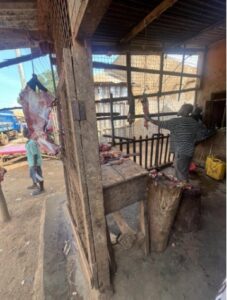
Kyangwali meat market. Source: Author.
CBO leaders were especially inspiring, pouring their energy into funding proposals and services for their neighbors despite budget cuts and camp violence. When asked about these problems, one leader in Kakuma said, “For me, I have hope as long as I am still breathing.” After enduring some of life’s most horrific experiences, all refugees need is a chance to move on and policies that will allow them to do so.
Without peace or integration, aid cultivates reliance. Aid organizations face historic budget cuts, layoffs, and shuttered programs, leaving millions of refugees with shrinking food rations, few jobs, and violence. But the refugees that the aid system was built to help can become part of a sustainable solution. Hiring refugees instead of host country nationals would reduce economic reliance on aid, create purpose and integration, and stimulate policy solutions from people with motivation and lived experience.
Refugee leaders navigate daily security issues in multicultural camps, developing peace and mediation skills. They are uniquely suited to join policy efforts targeting the conflicts that created them. Refugee-led governance initiatives could augment interventions and local stability, while creating a path to resettlement. With policies targeting peace and integration, refugee independence is possible.
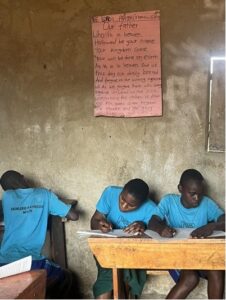
Classroom in Kyangwali at a school started by a refugee. Source: Author.
The humanitarians working in East Africa are heroes. The money and policies behind them have saved hundreds of thousands of lives. But aid has not stemmed the region’s flow of refugees or created integration. For aid to be sustainable, refugees need strategies for security and resettlement. Forming such policies is a daunting task, but without them, foreign aid will be throwing good money after altruistic money, and watching refugees starve all the same. East Africa’s foreign aid should not be cut, but it does need an endgame. Refugees should help build it.
Appendix:
| Participant | Origin | Location Now | Reason for Fleeing |
Predominant Views |
| P1
Server Age: ~30 |
Goma, DRC | Goma (M23 Control) | Finances prevent fleeing. | Conflict has hurt their income. |
| P2
Security Guard Age: ~ 30 |
Goma, DRC | Goma (M23 Control) | Finances prevent fleeing. | Conflict has hurt their income. |
| P3
Student Age: 19 |
Goma, DRC | Gisenyi, Rwanda | Violence against friends and family. | Afraid of being drafted to the Congolese Army. Thinks better rule of law under M23. |
| P4
Student Age: 23 |
Rwanda | Goma (M23 Control) | Unable to leave – unable to discuss reason. | M23 has better rule of law and better security. Classes and transportation limitations hindering studies. |
| P5
Business Owner Age: 38 |
Goma, DRC | Gisenyi, Rwanda | Maltreatment from state forces (FARDC). | M23 has better rule of law and better security. Business access became worse after the M23 takeover but slowly improving. |
| P6
CBO Founder Age: 29 |
Goma, DRC | Kyangwali | Fled violence/corruption – said local Congolese soldiers started rackets by giving guns to gangs. | Believes foreign groups giving weapons and fostering local conflicts to enable mineral trade. |
| P7
CBO Manager Age: 26 |
Rutshuru, DRC | Kyangwali | Friends recruited or killed by Mai-Mai, FDLR, Nyatura, M23. | Militias offer revenge and the best available job. Politicians send families abroad and don’t care to fix it. |
| P8
Pharmacist Age: 37 |
Central African Republic | Kakuma | Fled local tribal violence and Wagner Recruitments via government. | Thinks conflict will never end due to religious and tribal differences. Foreigners exploit local conflicts for resources. |
| P9
CBO Founder Age: 32 |
Baraka, DRC | Kakuma | P9’s brother was blamed for a local attack on an orphanage. They fled fearing revenge from the village. | Problems with locals implementing aid policies. Money needed to resolve conflicts in home countries to facilitate returns. |
| P10
Student/Teacher Age: 21 |
Uvira, DRC | Kakuma | Father’s family was intent on murdering his wife and children for marrying the wrong tribe. Believed it created “evil blood”. | Moved to Kakuma at 5 years old. Feels hopeless of ever leaving the camp. Feels lack of identity with Congo or Kenya. |
| P11
Elected Leader Age: 37 |
Cibitoke, Burundi | Kakuma | Father was killed by relatives who wanted his land. P11 had to flee as a male who could retake the land. His sisters could stay because they married into another family’s land. | Focused on providing for the refugee neighborhood that elected him. Looking for funding and resources. Preoccupied with security issues in the camp due to gangs competing for resources. |
| P12
Hospital Clerk Age: 27 |
Uvira, DRC | Kakuma | P12’s father and brother were killed by local militias. | Thinks root of conflict in Kivu is lack of identity, Rwandans born in Congo should be Congolese and cut ties with Rwanda. Believes Mai Mai are just trying to defend themselves from M23 and Rwandan funded aggression. Thinks the refugee crisis needs refugee led policy building. |


