





Irregular Solutions for Irregular Threats: Maritime Lessons from Dutch Counterpiracy Operations in Colonial Indonesia
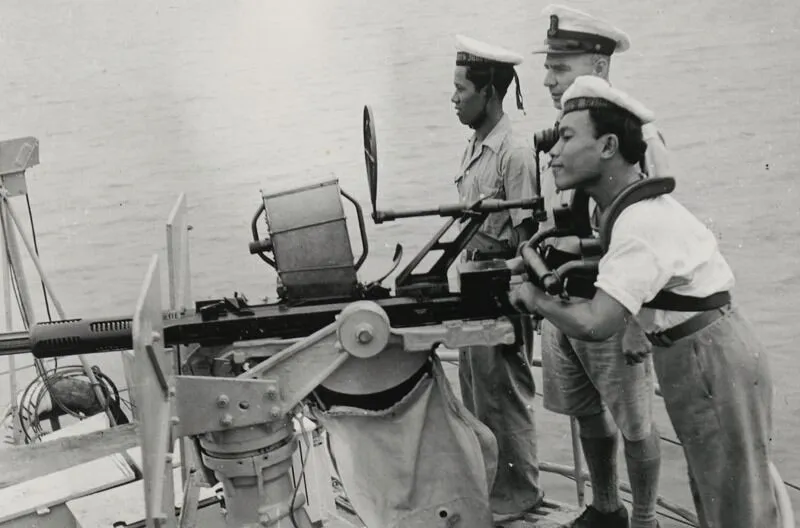

Editor’s Note: this article is being republished with the permission of the Irregular Warfare Initiative as part of a republishing arrangement between IWI and SWJ. The original article was published on September 15, 2025 and is available here.

With the de facto closure of the vital Red Sea route between Europe and Asia, 2024 proved a particularly challenging year for global maritime shipping. Houthi attacks forced shipping companies to reroute vessels around Africa, driving up costs and disrupting supply chains. While reflecting on the previous year, the Council on Geostrategy, a British think tank, stated that “The failure to establish the level of sea control needed to secure trade raises important questions as to the effectiveness of naval protection, future approaches, and most importantly, how navies that are already stretched thin ought to balance preparing for peer conflict with safeguarding shipping.” This statement captures a central tension that has confronted navies since the turn of the century: the need to balance persistent, non-traditional maritime security threats, such as maritime terrorism, piracy, and illegal fishing, with the renewed demands of great power competition, deterrence, and preparing for peer conflict. This article examines colonial Dutch counter-piracy operations to illuminate the tension between securing commerce and preparing for conflict, offering insights for modern maritime strategy.
Since late 2023, multinational operations in the Red Sea such as Prosperity Guardian, Aspides, and Poseidon Archer have struggled to reassure commercial shipping. Warships were scarce, response times slow, and much of the burden fell to private security firms. For Aspides, a fraction of the planned vessels were deployed, underscoring states’ reluctance to commit limited assets to missions perceived as non-traditional. These shortcomings echo earlier responses to Somali piracy, where Combined Task Forces 150 and 151 and the EU’s Operation Atalanta faced similar criticism over cost, sustainability, and strategic prioritization.
This modern dilemma is not unprecedented. The need to protect commercial shipping in peacetime while preparing for major conflict has shaped maritime strategy for centuries. History shows that navies often delegated certain maritime security responsibilities to nonmilitary or irregular actors to preserve high-end warfighting readiness. One telling example comes from Dutch colonial counter-piracy operations in the Indonesian archipelago during the late nineteenth and early twentieth centuries. There, Dutch authorities faced the same dual challenge of persistent piracy threatening trade and the need to remain ready for peer conflict. Examining how they navigated these pressures offers valuable insights for today’s naval planners and policymakers confronting the same enduring trade-off.
Historical Context: The Dutch in Colonial Southeast Asia
The Dutch regained control of their former colonial possessions in present-day Indonesia under the Anglo-Dutch Treaty of 1814. Although their territorial possessions had been relatively limited at the time, the nineteenth century saw a period of widespread Dutch expansionism marked by imperialist wars aimed at enlarging and consolidating territory. By 1900, the Kingdom of the Netherlands centrally administered most of present-day Indonesia.
The military organization, tasks, and ministerial coordination of the Royal Netherlands East Indies Army (KNIL) were relatively straightforward. But the maritime domain was not, consisting of two to three separate organizations subordinate to different departments with varying (and often rivaling) responsibilities. Throughout the nineteenth and early twentieth centuries, Dutch maritime forces in the Indonesian archipelago comprised a complex organization of conventional national forces, a regional force, and a civilian paramilitary force. This arrangement resulted primarily from what were described as “dual pressures.” On one hand, the Dutch sought external security against outside powers such Britain, Spain, and, later, Japan. On the other, they faced an internal security challenge centered on persistent piracy around the archipelago. In other words, this was a dual challenge comparable to today’s tension between traditional maritime security responsibilities and the need to balance irregular threats.
Like other regions with significant maritime trade, piracy has been a persistent feature of the Malaysian and Indonesian archipelagos. However, by the start of the nineteenth century, piracy increased considerably as a consequence of the diminishing power of the East India Companies and the resulting changes in intra-Asian trade patterns. As soon as the Dutch Commissioner-General arrived in 1816, alarming reports concerning attacks on commercial shipping and coastal regions arrived. The Dutch labeled these attacks “acts of piracy,” but Indonesians often saw them as legitimate resistance against foreign rule sanctioned by local rulers not unlike early-modern European privateering.
Besides piracy, the Dutch colonial administration was wary of foreign power encroachment on its territorial claims. Interestingly, the colonial administration considered these concerns to be interrelated with the issue of piracy, as they feared that Britain or Spain could justify intrusions into Dutch-claimed territory under the guise of counterpiracy operations. As such, a successful maritime counterpiracy strategy was considered essential for various socio-economic, colonial administrative, and geopolitical reasons.
Dutch Colonial Maritime Strategy: A Dual Approach
To handle these dual pressures, the Dutch formed a colonial navy, Koloniale Marine. This force was separate from the Royal Netherlands Navy’s auxiliary squadron, reported to the Ministry of the Colonies instead of the Ministry of the Navy, and drew personnel from the regular navy. The newly colonial navy carried out internal security and counterpiracy responsibilities, while the auxiliary squadron had the core task of protecting the Dutch colonial territories against external threats. The auxiliary squadron had a relatively meager fleet of two frigates and four corvettes in 1818, in practice acting as an auxiliary to the colonial navy. The latter had 38 vessels with roughly 1,000 sailors and officers the same year. The colonial navy was primarily outfitted with conventional but outdated warships, converted commercial vessels, and gunboats to face largely ill-equipped and asymmetric adversaries, an arrangement that today may be considered maritime irregular warfare.
The Dutch took a conventional approach to an inherently asymmetric and irregular naval threat by choosing the colonial navy. As a result, the colonial navy proved utterly ineffective at its primary task of counterpiracy. There were occasional successes, such as in 1817, when the colonial navy’s frigate HNLMS Wilhelmina captured several pirate vessels off Seram Island. But their slow, bulky ships were no match for the fast and agile pirate craft, which avoided direct confrontation. Moreover, the densely wooded islands with their hidden inlets offered the pirates excellent hiding spaces. And since they could often count on the support of the local population, they were nearly untraceable. Accordingly, the cost of the colonial navy was disproportionate to its benefits, and criticism rapidly grew over the use of costly naval assets for ineffective counterpiracy operations. Moreover, naval officers increasingly began to lament such ineffective counterpiracy tasks, which they considered a task “unworthy of the navy.”
Piracy in the Indonesian archipelago persisted despite the colonial navy’s best efforts. The Governor-General of the Dutch East Indies decided to change strategy in 1821 by recruiting and mobilizing the local Javanese population for counterpiracy purposes. Their fast-sailing and maneuverable kruisprauwen cruisers were small indigenous sailing boats suited for the environment. These units would be decentrally organized under the authority of the local “resident,” a high-ranking Dutch colonial official governing an administrative division and armed with three to four guns, klewangs (traditional swords), and assegais (javelins). Local colonial authorities established a paramilitary civilian maritime force, crewed and outfitted by the local population, often under the command of a Dutch officer. This essentially countered an irregular threat with an equally irregular force. This “third” maritime force was known as the “Government’s Navy” (Gouvernementsmarine) in 1861.
The irregular Government’s Navy proved more effective at countering piracy than its naval counterpart, leading to the colonial navy’s disbanding in 1838. Vessels were reassigned to the auxiliary squadron of the Royal Netherlands Navy, which thereafter became known simply as the Dutch Squadron (Nederlands Eskader), as it no longer served as an auxiliary to the colonial navy. Although the conventional Dutch Squadron officially supported counterpiracy efforts, in practice the Government’s Navy absorbed most non-traditional security tasks. As a result, the squadron acquired the local nickname “half company” (Setengah Kompeni) due to its semi-military status.
The division allowed the Ministry of the Colonies, which was responsible for the Government’s Navy, to focus exclusively on the provision of inexpensive, small, and maneuverable vessels for counterpiracy purposes. Previously, the Ministry of the Navy obstructed their purchase as those capabilities were considered useless for more traditional security responsibilities. A larger fleet of smaller vessels was seen as more effective against asymmetric threats like piracy than a handful of larger, more sophisticated warships. Throughout the nineteenth century, the Government Navy maintained between 34 and 90 vessels, far outnumbering the much smaller regular naval fleets. Moreover, by recruiting locally and increasingly under the supervision of Dutch merchant officers instead of the more expensive naval officers, the counterpiracy campaigns became more cost-effective. As such, the Dutch colonial authorities effectively delegated and civilianized counterpiracy operations away from the regular military actors towards the more irregular and semi-military Government’s Navy.
Historical Parallels with Today
The Dutch colonial experience in the Indonesian archipelago offers striking parallels to the maritime security challenges confronting today’s navies, now underscored by the Houthi campaign in the Red Sea. Then, as now, maritime forces faced a persistent dual pressure: sustaining internal security against threats such as piracy or terrorism while remaining ready for external defense against powerful state rivals. The Dutch also recognized that these missions were connected: suppressing piracy helped deter foreign encroachment. Similarly, today’s “non-traditional” maritime threats (such as piracy, terrorism, and illegal fishing) are often closely linked to larger geopolitical competition. While the strategic contexts differ, the Houthi threat to shipping illustrates how seemingly localized maritime security challenges can be shaped and amplified by the ambitions of more powerful state actors.
The most striking analogy, however, is represented by the Dutch colonial authorities’ decision to delegate or outsource an asymmetric threat, in this case, counterpiracy operations, to an equally asymmetric and irregular semi-military civilian force. The Governor’s Navy, crewed with local Javanese under the supervision of Dutch merchant or naval officers, operated with a semi-military objective and thus represented an early precursor to today’s private maritime security companies.
In a sense, this parallels 21st century counterpiracy operations off the coast of Somalia. Initially, flag states relied on naval deployments, but Somali pirates held significant advantages with their fast and maneuverable skiffs and their ability to avoid direct confrontation. This led states to turn to irregular solutions: embarked guards and a larger number of cheaper, smaller escort vessels – as seen in counterpiracy operations in the Gulf of Guinea – provided a more effective defense and deterrence than a few powerful warships. In this sense, the rise of private maritime security companies mirrors the Dutch decision to counter irregular threats with equally irregular forces.
Further analogies can be observed regarding the apparent issue of cost-effectiveness, which played a significant role in both the establishment of the Governor’s Navy and the utilization of private maritime security companies today. Moreover, institutional conflict within naval circles concerning a navy’s ‘core task’ also represent a persistent feature regarding the delegation of security, as illustrated by Rear Admiral Terence McKnight, the inaugural commander of CTF-151, who in 2012 said: “It is time for the maritime community to take responsibility for their own security and free our navies to defend our freedoms on the high seas.” Additionally, similar to the political pressures faced by the ill-equipped and outnumbered Colonial Navy, the international naval coalitions equally received harsh criticism from their respective political establishments, as their attempts to suppress piracy initially had little effect and caused the further diffusion of pirate activity over a larger area.
With the return of great power competition and a renewed focus on traditional security, these insights may regain relevance. The Houthi attacks have increasingly become a concern for the private security industry, while states are growing more reluctant to engage in such non-traditional and irregular maritime threats. Moreover, the mobilization of equally irregular actors by states in countering a variety of asymmetric threats, as we saw with the Governor’s Navy, might make a return as well. As discussed concerning the use of nonmilitary actors in the South and East China Sea disputes, where coast guards and maritime militias are progressively overshadowing their naval counterparts. Whether Mark Twain said so or not, the maxim that history does not necessarily repeat itself but often rhymes certainly holds true, as the case study of Dutch colonial maritime strategy in the Indonesian archipelago highlights.
The views expressed are those of the author(s) and do not reflect the official position of the Irregular Warfare Initiative, Princeton University’s Empirical Studies of Conflict Project, the Modern War Institute at West Point, or the United States Government.


