





“A Risk Too Far: A Psychological Autopsy of the Planning for Arnhem” Book Review
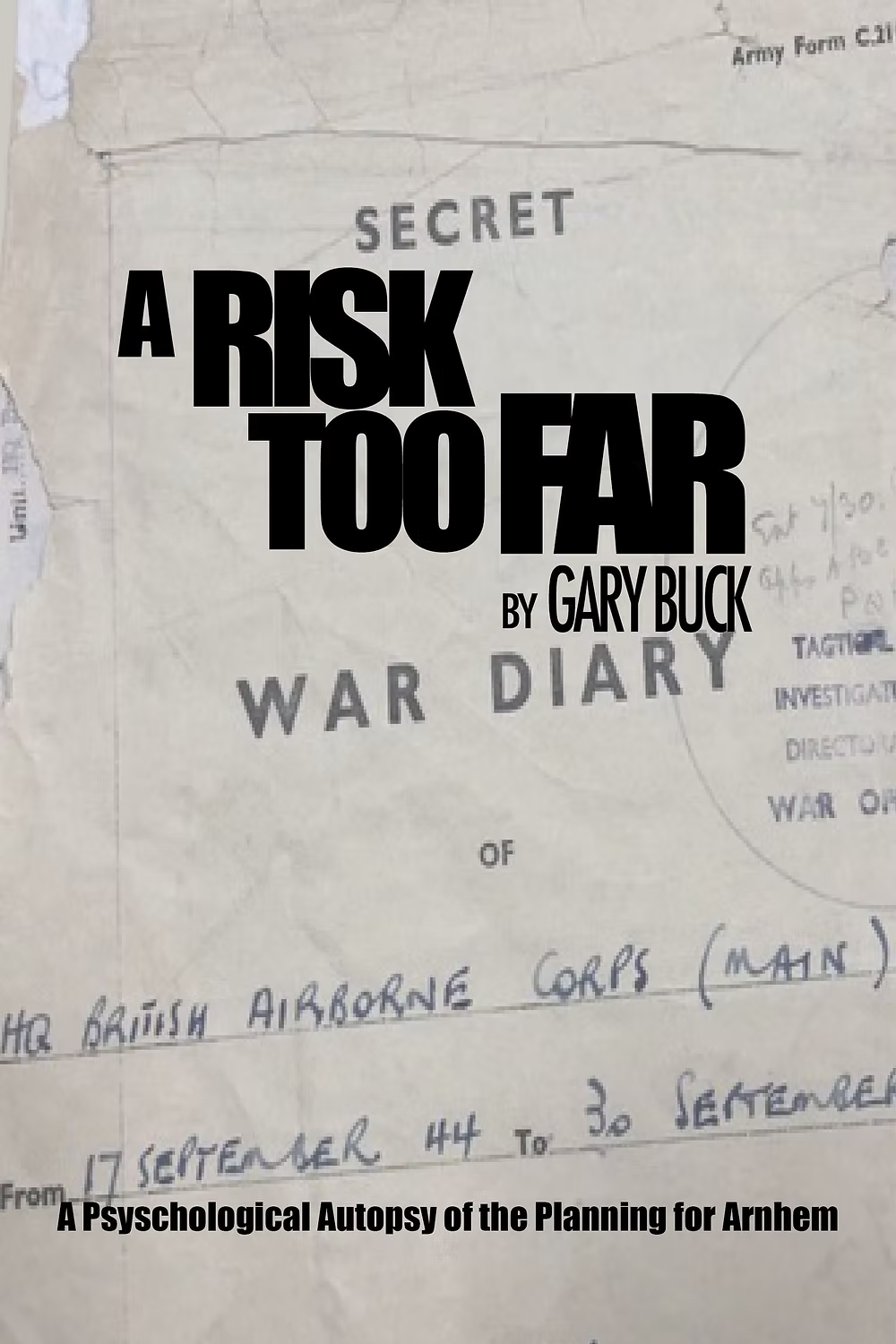

A Risk Too Far: A Psychological Autopsy of the Planning for Arnhem. Gary Buck. Howgate Publishing, 2025, ISBN 9781912440771, pp. 242. $27.28.
Operation Market Garden has become a near-mythical battle of the modern age. The World War II (WWII) effort to capture a series of bridges across the Netherlands in 1944 and get the Allies across the Rhine into Germany “to end the war by Christmas” was an audacious gamble that failed for a host of reasons. Many of today’s military officers and security professionals, including myself, were introduced to the WWII battle through Cornelius Ryan’s 1974 book A Bridge Too Far, and the 1977 film of the same name starring Sean Connery. Each year, those same people often post about the battle on social media, an honor that seems to be shared only with D-Day and the 1993 “Blackhawk Down” battle, officially known as Operation Gothic Serpent and also remembered in print and film. With the 81st Anniversary of the September 1944 battle, many of those same professionals will engage in vigorous debates about the operation, its heroes and villains, its risks, and perhaps most importantly, what can be learned by today’s leaders.
The operation has been studied endlessly ever since the survivors of the British 1st Airborne Division escaped across the Rhine, and it is difficult to add much new to the discussions. Therefore, I found Gary Buck’s psychological analysis of some of the battle’s key contributors a refreshing and enlightening view of the operation. He not only explores the classic operation through a new lens but also provides ample material for a new generation of leaders to digest. His combination of history and psychological analysis should have leaders examining their own decision-making process and even their own personality as they plan and conduct military operations.
Buck assumes that his readers of A Risk Too Far are familiar with the battle and does not spend much time exploring the intricacies of the battle. He instead focuses on the planning aspect of the operation, and how the many factors later found to be causal in the operation’s failure contributed to or were ignored by three key British officers: 21st Army Group commander General Bernard Montgomery, First Allied Airborne Army deputy commander Lieutenant General Frederick Browning, and the commander of the British 1st Airborne Division Major General Roy Urquhart. Other works have certainly examined these three and judged their plans and actions throughout the operation. Buck breaks away from the pack of prior researchers by providing a psychological assessment of each and then explores how their mental state impacted the men’s decision-making process and risk analysis. He thus helps explain what went wrong by explaining the thought process behind major decisions.
With his experience of getting into people’s heads, Buck brings credibility to this subject. He holds a PhD in Psychology and is a visiting lecturer at King’s College London, and also served as a reservist in the British Army. While not a historian, Buck should be commended for his careful use of historical sources in this study. He acknowledges the biases and difficulty of building psychological profiles from biographies of all types, and whenever possible, bases his assessments on comments, statements, and records contemporary to the operation’s planning phase. This provides the most accurate profile possible short of interviewing the men’s ghosts.
Readers without a background in the science of psychology or its most current tools and tests should not balk over fears of the work’s complexity. Buck provides an introduction to each of the methods he applies to the British commanders and often refers to well-known studies that help ground the reader. He simplifies difficult concepts and even shines new light on some tests the reader may be familiar with, such as the Myers-Briggs Type Indicator that many leaders have taken during professional courses to understand personalities. The book devotes a chapter to analyzing Montgomery’s personality (assessed as an Introverted, Sensing, Thinking, and Judging (ISTJ “Logistician”), someone who “means what they say and say what they mean”) and then discusses how it influenced his initial push for Market-Garden, despite indications of difficulty with the airborne operation, and later withdrawal from the planning. He similarly discusses the two other leaders, but also branches out into various decision-making models that frame decisions that were made, and contrasts them with other options available. The personality and stressors of each leader then help the reader understand why certain paths may have been abandoned, diminished, or ignored during the planning process. The book culminates with an exercise of “outside-in analysis” of the problems facing Urquhart in the most difficult battle of the operation at Arnhem itself, a fascinating look at “what might have been.”
One of the assessments that spoke most prominently to me was a section dealing with Urquhart, his prior experience, and his capacity to handle complex problems. Buck shows that during Market Garden, he was an experienced infantry officer but lacked airborne experience, a mission set that required different approaches to solve problems unique to those operations. Buck analyzed Urquhart’s academic and military records and concluded that although he successfully commanded troops at the Brigade level, he was unready to or incapable of making the jump to Division commander, especially when forced to handle problems outside his experience. When he was unable to cope with the higher level of planning complexity, he reverted to his previous experience, which unfortunately did not necessarily apply to airborne infantry problems. The result was that he misdiagnosed or ignored several problems and ultimately accepted too much risk in the Arnhem operation, relying almost on hope for a successful outcome.
The impacts of this book go beyond the analysis of historical figures in their operational context, although it is also a fascinating historical study. Each of the generals, along with the various psychological and risk analysis tools, provides insight for modern leaders. Everyone’s personality, background, and training will influence their decisions, especially during a crisis or stressful period. Understanding one’s shortfalls and those of the people they work with can help circumvent problems that lead to operational failure. Buck’s work should be considered a litmus test for modern military leaders. They should spend time after each chapter analyzing themselves and honestly assessing how they might react under similar stress. They should consider adapting some of the risk analysis techniques to their own processes to help identify and overcome problems that their own psychological biases could mask. With a little help from this work, readers can better “know themselves,” to paraphrase Sun Tzu.
Ultimately, this book should appeal to a broad cross-section of military and security officials as well as history buffs. Buck provides a fresh look at a well-known operation and also provides tools for modern decision-makers. It could be described as a psychological staff ride across a familiar battlefield that provides potential insights into our own thinking and planning of military operations. A Risk Too Far is more than worth your time, and I, for one, hope Buck continues his work to analyze the psychology and risk assessments of other historical leaders.
(The views expressed in this article, book, or presentation are those of the author and do not necessarily reflect the official policy or position of the United States Air Force Academy, the Air Force, the Department of Defense, or the U.S. Government. USAFA-DF-2025-913)


